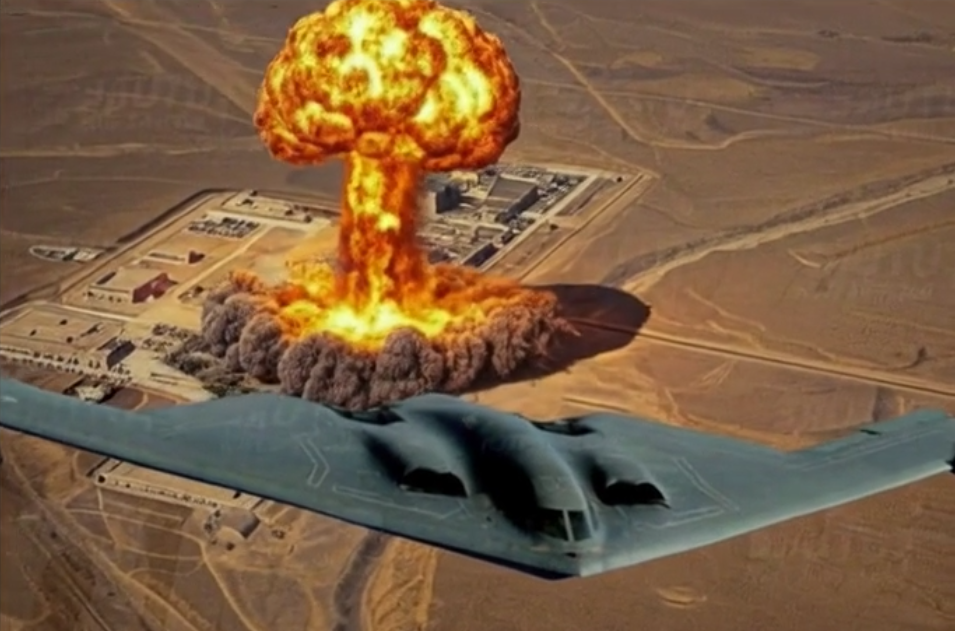
In military aviation, few aircraft command as much attention as the Northrop B-2 Spirit. Known worldwide for its stealth profile and distinctive flying-wing shape, the bomber has become one of the most recognizable symbols of American air power. Built to operate deep inside hostile territory while avoiding detection, the B-2 remains one of the most advanced aircraft ever placed into military service. The aircraft’s origins trace back to the Cold War, when the United States sought a bomber capable of penetrating heavily defended airspace. Development began during the 1970s under intense secrecy, with the aircraft eventually making its first public flight in 1989. Since entering service, the B-2 has supported multiple long-range missions and demonstrated its ability to strike strategic targets across great distances.
What immediately sets the B-2 apart is its unusual design. Unlike conventional bombers, it has no traditional fuselage or tail structure. Its smooth flying-wing shape reduces drag while also minimizing radar visibility. Combined with radar-absorbing materials and carefully engineered surfaces, the aircraft presents only a tiny radar signature, allowing it to approach defended areas with minimal detection risk. Beyond stealth, the bomber offers remarkable reach. Powered by four General Electric F118 engines, the B-2 can travel more than 6,000 miles without refueling, giving it the ability to launch missions from the United States and reach distant targets without relying heavily on overseas bases. Aerial refueling extends that reach even further, making it one of the most flexible long-range strike platforms in operation.
The aircraft also carries significant firepower. With a payload capacity of up to 40,000 pounds, it can deliver both conventional and strategic weapons with high precision. This allows commanders to assign the B-2 to missions where accuracy, surprise, and survivability are essential. Its cost reflects its complexity. Each aircraft has been valued at roughly $2 billion, and only 21 were built, making the fleet extremely limited. That rarity increases its strategic importance, as each bomber represents a major national asset. More than a weapon, the B-2 serves as a deterrent 🛫⚡ Its ability to operate almost unseen sends a clear message that long-range precision strike remains a central part of U.S. military capability.