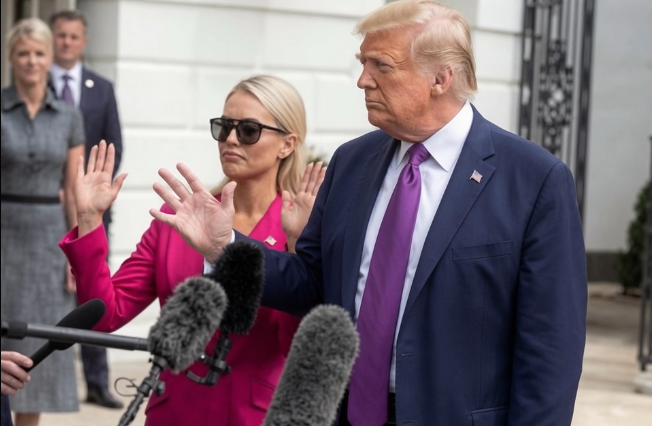
On Tuesday, August 1, 2023, the United States witnessed a historic and unprecedented development in its political and legal history. For the first time, a former president faced federal criminal charges stemming from actions taken after leaving office. Special Counsel Jack Smith’s indictment alleged that Donald Trump conspired to defraud the United States, obstructed the congressional certification of the 2020 presidential election, and interfered with constitutional rights tied to the voting process.
The four felony counts focused on efforts in the weeks following the November 2020 election. Prosecutors claimed Trump and associates promoted knowingly false assertions of widespread fraud, pressured state officials and the Justice Department to alter results, advanced alternative elector schemes in key states, and sought to disrupt the January 6, 2021, joint session of Congress that formalized the Electoral College outcome. Trump pleaded not guilty and has maintained that the prosecution represents selective enforcement driven by political motives rather than neutral application of the law.
Public reaction revealed deep national divisions. Supporters of the indictment viewed it as a necessary affirmation that no individual, regardless of prior office or influence, stands above the law. They argued that attempts to reverse certified election results threatened core democratic processes and that accountability was essential to deter future misconduct. Critics countered that the case illustrated the weaponization of federal power against a leading political opponent. They pointed to the timing relative to the 2024 campaign, the absence of comparable prosecutions in other contested elections, and the risk that criminal charges could chill legitimate challenges to election administration or outcomes.
As the matter advanced through the courts, attention shifted toward concrete legal questions: the strength of evidence regarding specific intent, the boundaries between protected political speech and criminal conspiracy, claims of presidential immunity, and the proper role of special counsels. Discovery, pretrial motions, and potential testimony from former aides and officials became central rather than partisan talking points. The Supreme Court’s eventual rulings on immunity further shaped the contours of the case and established precedents with implications beyond any single defendant.
Whatever the ultimate resolution—dismissal, plea, acquittal, or conviction—the proceedings have already left a lasting imprint. They have intensified debate over the limits of executive authority after a president leaves office, the appropriate use of criminal process in highly polarized election disputes, and the resilience of public trust in both electoral systems and judicial institutions. Future generations will examine this episode when weighing how democracies balance accountability with the risk of politicized justice. The case underscores that the health of democratic institutions depends not only on formal rules but also on the restraint and legitimacy with which those rules are enforced.