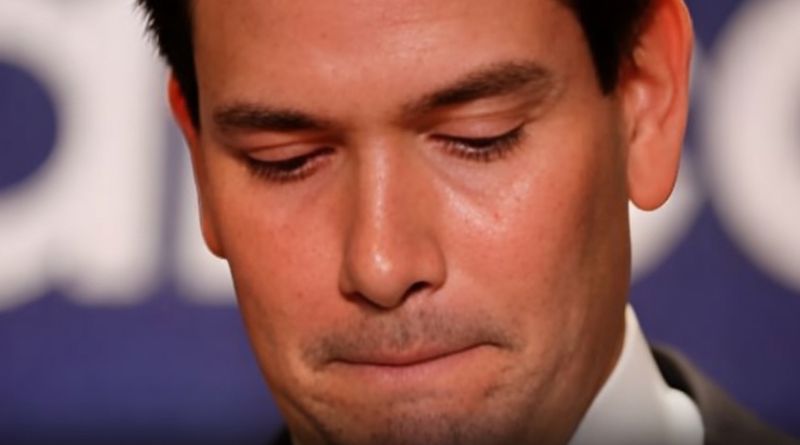
Marco Rubio’s growing influence over federal regulatory review signals a subtle but significant shift in how national policy may be shaped during President Donald Trump’s second administration. While the change has drawn little public fanfare, it places new attention on one of Washington’s most powerful yet least visible mechanisms: the office that decides whether federal rules advance, are rewritten, or quietly fade away.At the center of that system is the Office of Information and Regulatory Affairs, commonly known as OIRA. Housed within the Office of Management and Budget, OIRA reviews major regulations proposed by federal agencies before they can take effect. That includes rules from agencies such as the Environmental Protection Agency, the U.S. Department of Labor, and the Food and Drug Administration.
These agencies draft rules affecting everything from air quality and workplace safety to product labeling and drug approvals. Before those rules move forward, OIRA examines whether they align with White House priorities, whether projected benefits justify economic costs, and whether agencies have provided enough evidence to support action. In practice, that review can reshape a proposal—or halt it entirely. Critics often point out that OIRA’s power lies in its ability to slow the process without issuing a direct rejection. A rule may be returned for revisions, delayed pending further analysis, or held indefinitely through repeated requests for more data. Because those decisions happen largely behind closed doors, regulations can effectively disappear without a public vote or formal cancellation. Rubio’s expanded authority emerged through executive actions that strengthened White House oversight of federal rulemaking. Although he continues serving as Secretary of State, his influence now extends into a policy lane that historically operates far from public speeches and campaign headlines. Analysts note that this fits Rubio’s political style: measured, strategic, and often exercised through internal channels rather than public confrontation. Supporters of tighter review argue that stronger oversight helps prevent costly or excessive regulation. They say businesses benefit when agencies must justify every major rule, and taxpayers gain when federal mandates are scrutinized for efficiency 💼📊. To them, centralized review reduces duplication and curbs bureaucratic overreach.
Opponents see a different risk. They argue that delays can weaken protections without public accountability, especially when regulations involve environmental safeguards, labor standards, or consumer health ⚖️🌿. In their view, when unelected reviewers quietly stall agency action, public debate becomes harder and trust in government declines. The broader concern is not always what gets rejected—but what never reaches the public at all. A delayed workplace safety standard, a postponed emissions rule, or a shelved consumer protection measure may never generate headlines, even though the consequences can be felt for years. Under Rubio’s watch, attention will likely focus on whether review timelines remain predictable, whether agencies receive clear guidance, and whether decisions become more transparent 🏛️. If review standards are openly explained, supporters say confidence could improve. If not, critics warn that invisible decision-making may deepen political cynicism. For now, Rubio occupies one of the quietest but most influential gates in Washington. His decisions may determine not only which federal rules survive, but which proposals never emerge into public view at all.