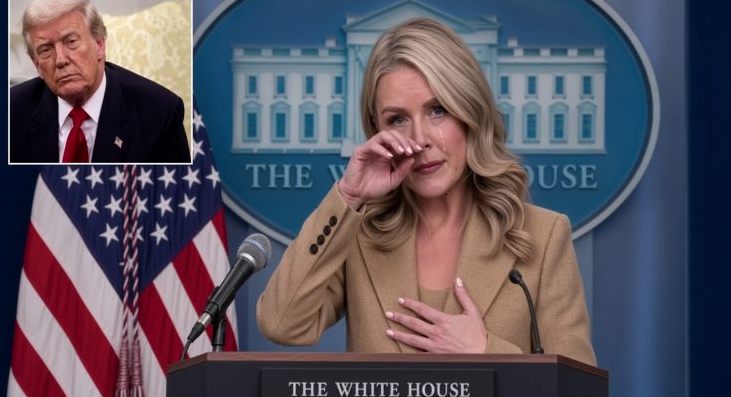
WASHINGTON — White House Press Secretary Karoline Leavitt mounted an aggressive defense of the Trump administration’s overhaul of presidential press access during an on-stage conversation with Axios co-founder Mike Allen, arguing that dismantling traditional press pool arrangements modernizes coverage rather than curtails journalistic scrutiny.
The pointed exchange laid bare an escalating conflict between the executive branch and legacy news organizations over who holds the authority to decide which reporters board Air Force One, access the Oval Office, and staff the tight protective pool that tracks the commander-in-chief around the clock. At the core of the controversy is the administration’s move to strip the Associated Press of its permanent, guaranteed seat within the rotating press pool.
The confrontation touches on foundational questions of First Amendment norms, executive transparency, and whether long-standing conventions can survive in an information ecosystem where digital platforms, streaming creators, and partisan commentators compete directly with wire services for White House credentials.
Clash Over Legacy Wire Services
During the forum, Allen pressed Leavitt on whether diluting the AP’s historic role threatens the institutional memory and historical record of the American presidency.
To underscore the role of independent, continuous access, Allen cited AP photographer Evan Vucci’s iconic image of Donald Trump raising his fist against an American flag moments after surviving the July 2024 assassination attempt in Butler, Pennsylvania. That photograph—captured because an experienced wire photographer had guaranteed proximity within the tight traveling pool—became an indelible historical artifact of modern political history.
Leavitt dismissed the argument that removing the wire service’s automatic slot amounted to censorship or exclusion.
“Why should one legacy entity have an unchallengeable, permanent monopoly over a seat that belongs to the wider press corps?” Leavitt argued, maintaining that media consumption patterns have changed and access protocols must evolve to reflect modern digital newsrooms.
Under the traditional pool arrangement, a small group of rotating print, wire, radio, and television journalists accompanies the president in restricted spaces, rapidly transmitting dispatch notes, quotes, and imagery to hundreds of domestic and international subscriber organizations that cannot afford full-time traveling logistics.
While proponents of reform argue that opening seats democratizes access for emerging publications, media historians and press freedom advocates counter that wire services provide non-partisan, real-time observational reporting essential to public transparency during fast-moving crises.
The Fight for Operational Independence
The discussion quickly shifted to the role of the White House Correspondents’ Association (WHCA), the century-old, independent journalist-led board that has historically managed pool rotations, seat distributions, and access rosters without government interference.
Allen raised concerns regarding the bedrock democratic norm that politicians should never select the reporters assigned to hold them accountable. The WHCA and press freedom groups have consistently argued that allowing the government to curate its own press pool invites retaliatory access management, enabling administrations to reward favorable coverage while sidelining aggressive questioners.
Leavitt challenged the WHCA’s authority, insisting that the executive branch has the right to decide how to manage security clearances, spatial limits, and entry into executive facilities. She contended that a private press association should not function as the exclusive gatekeeper to the executive branch, especially as non-traditional creators and digital outlets command massive audiences.
Press freedom legal experts caution that granting any administration unilateral discretion over pool assignments creates an institutional hazard, transforming a vital watchdog apparatus into a lever for editorial compliance.
Accessibility Metrics Under Scrutiny
Leavitt also rejected assertions that the administration’s maneuvers were ideologically driven or aimed at punishing adversarial news organizations, pointing to the ongoing attendance of legacy broadcast networks and major dailies in the James S. Brady Press Briefing Room.
She framed the administration’s media engagement as uniquely expansive, highlighting direct communication across multiple formats. Allen referenced comparative data showing Trump had logged 468 combined press conferences and interviews at a comparable point in his term, compared with 164 for former President Joe Biden.
However, media analysts caution that gross event counts do not necessarily equate to rigorous transparency. Brief exchanges shouted over running marine helicopter engines or appearances on sympathetic talk programs offer vastly different scrutiny than formal, solo press conferences with sequential follow-up questions from the institutional press corps.
The fight over White House pool seats reflects a defining institutional battle for modern political journalism. As the administration continues to rewrite access protocols, the outcome will likely determine whether presidential accountability remains anchored by independent, institutional press protections or becomes subordinate to the discretionary preferences of the executive branch.