In a recent press exchange, Peter Doocy pressed Donald Trump on the timeline of a hypothetical conflict involving Iran. Doocy framed his question around the idea that Iran’s military capabilities—including its air force, navy, missile systems, and even key leadership tiers—had already been neutralized. Given such a scenario, he asked whether it would be realistic to expect the conflict to conclude within the span of a single week. His question reflected broader public curiosity about how quickly modern conflicts could end if one side’s strategic assets were decisively weakened early on.
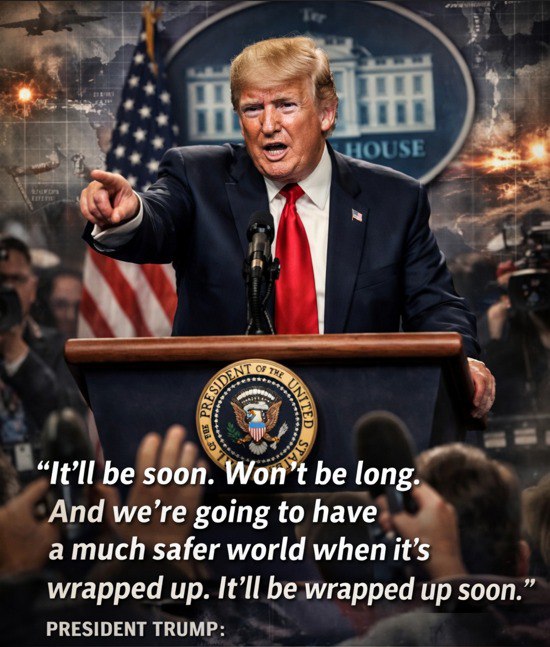
In response, Trump projected confidence and urgency, suggesting that the end of the conflict would come in the near future. He emphasized that it would not take long for the situation to be resolved and expressed optimism about the outcome. According to his remarks, once the conflict concludes, the world would be significantly safer and more stable. Trump reiterated his belief that the resolution was imminent, underscoring a sense of control and inevitability about the process.
The exchange highlights the contrast between journalistic scrutiny and political messaging during times of heightened tension. While Doocy’s question focused on practical timelines and military realities, Trump’s answer leaned toward reassurance and forward-looking optimism. Together, their interaction illustrates how narratives around conflict can shift between analytical inquiry and confident projection, especially in high-stakes geopolitical discussions.