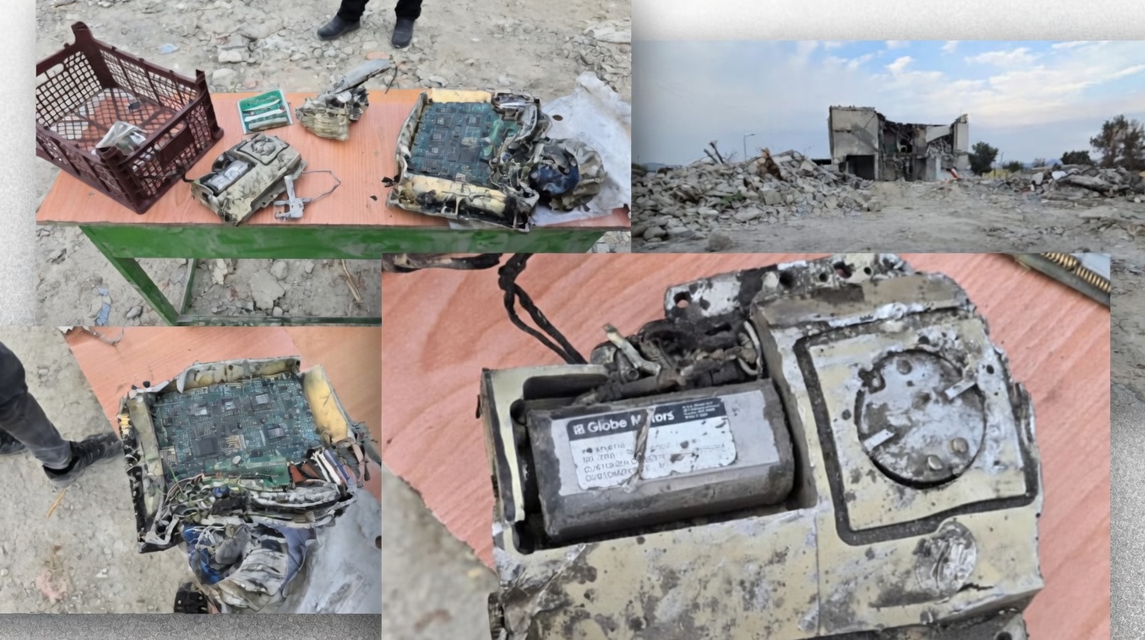
Reports circulating online claim that fragments recovered from a strike on a girls’ school in Iran belong to a Raduga Kh-55, a cruise missile originally developed in the former Soviet Union. Some commentators have gone further, suggesting the debris indicates the use of an “American-made” weapon. However, a closer review of the available images and technical details shows that these conclusions are far from definitive.
Photographs shared on social media do appear to show missile components, including sections of a fuselage and internal parts. Analysts have attempted to match these fragments to known designs, pointing to similarities with the Kh-55’s structure. Yet such identifications are inherently uncertain, especially when based solely on partial debris and low-resolution imagery. Many cruise missiles share overlapping design features, making visual confirmation difficult without serial numbers or clear manufacturing marks.
Additionally, the Kh-55 itself is not an American system, which further complicates claims that the weapon involved was U.S.-made. Misinterpretations can arise quickly in fast-moving conflict situations, where early narratives often rely on incomplete or unverified evidence. Experts typically require forensic analysis, including material composition and verified sourcing, before confirming the origin of any weapon. At this stage, the available evidence does not conclusively establish the type or origin of the missile used in the strike. Investigations are ongoing, and more reliable findings will likely depend on independent verification rather than initial online speculation or fragmented visual clues.