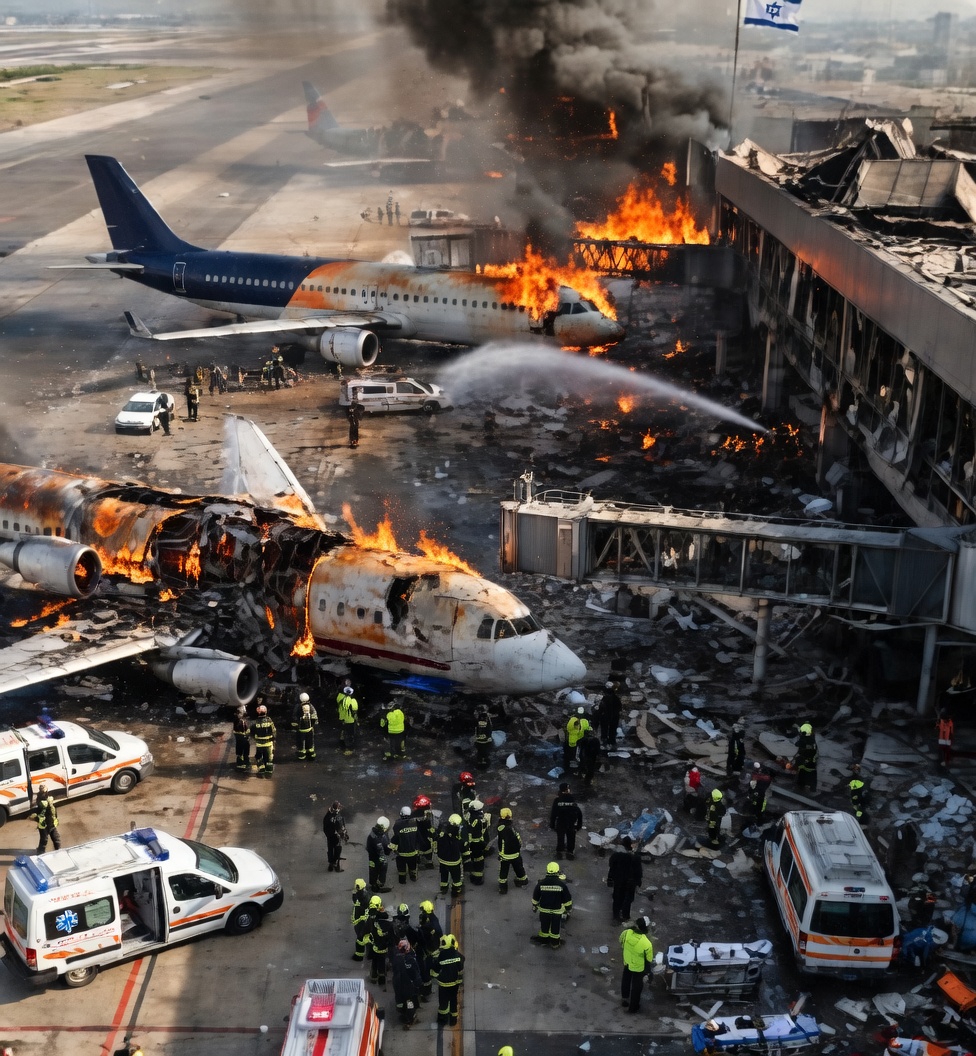
In a major escalation of regional tensions, Iran launched ballistic missiles toward Tel Aviv, with reports indicating that some of the missiles were equipped with cluster warheads. Iranian officials described the strike as retaliation for the killing of a senior Iranian security figure, an incident Tehran attributes to Israeli forces. The attack triggered flashes across central Israel, damaged civilian infrastructure, and resulted in the deaths of at least two people. The reported use of cluster munitions has intensified concern among international observers because these weapons release multiple smaller explosives across a broad area, leaving unexploded fragments that can endanger civilians long after the initial impact. ⚠️ The strike is part of a wider military escalation that has steadily expanded since the beginning of 2026. Iran has launched repeated attacks aimed not only at Israeli cities but also at U.S. military installations and allied facilities across the Gulf region. Among the locations reportedly targeted are Kuwait, Bahrain, the United Arab Emirates, and Saudi Arabia. Iranian leaders have framed these actions as part of a broader campaign of retaliation following a series of assassinations involving senior military and intelligence officials, events that have sharply increased regional instability.
In response, Israel and the United States have intensified air operations inside Iran, targeting military installations, missile sites, and nuclear-related infrastructure. These strikes have underscored the growing scale of the confrontation and the differing strategic calculations between Washington and Jerusalem. Israel’s missile defense systems, including Iron Dome and Arrow 3, have intercepted many incoming missiles, but officials acknowledge that defending against large missile barrages—especially those carrying cluster munitions—remains difficult. Civilians on both sides continue to face rising danger as casualties and structural damage increase. 🚨 The conflict is also producing wider global consequences. Energy markets have reacted sharply after attacks on Gulf infrastructure, sending prices higher and raising concerns about supply disruptions. Diplomatic efforts remain stalled, while both Iran and Israel continue signaling readiness for further military action, leaving the region in a highly unstable and uncertain state. 🌍