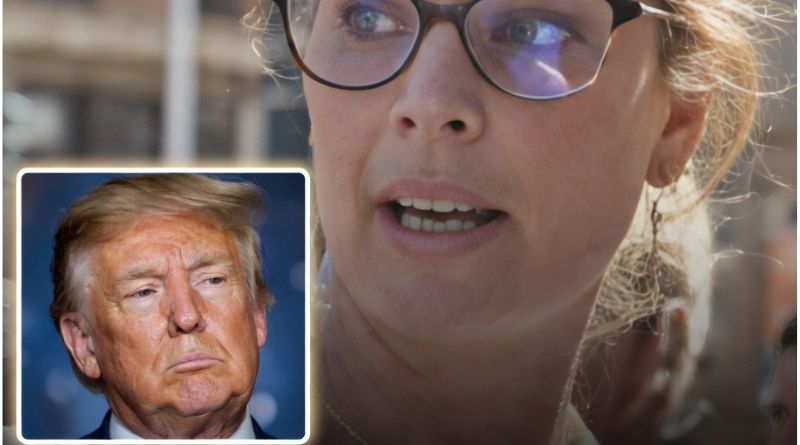
The long-standing legal and social fallout surrounding the criminal activities of the late disgraced financier Jeffrey Epstein has taken a significant turn with the emergence of a dramatic new claim. An individual, identifying as an alleged victim of Epstein, has publicly asserted the existence of what she labels “secret recordings.” These materials purportedly capture former U.S. President Donald Trump engaging in behavior described as highly compromising and potentially incriminating. This revelation, while currently unproven, has reignited the global conversation regarding the expansive and often murky network maintained by Epstein before his death in federal custody in 2019. Despite the gravity of the accusations, it is critical to note that no such recordings have been released to the public, nor have they undergone forensic authentication by law enforcement or judicial bodies.
To understand the weight of these allegations, one must look back at the Epstein case’s broader context. Jeffrey Epstein was arrested in July 2019 on federal sex trafficking charges, a move that sent shockwaves through the upper echelons of international politics, finance, and entertainment. His unique ability to cultivate relationships with some of the world’s most powerful figures meant that his downfall would inevitably cast a long shadow over his associates. Following his death, investigators and victims’ advocates have continued to probe the depths of his operations, seeking accountability for any co-conspirators. The latest claim involving Donald Trump is a manifestation of these unresolved questions, surfacing in a climate where the public remains hungry for transparency regarding the elite circles in which Epstein moved.
The specifics of the new allegation center on encounters the woman says took place years ago. She asserts that the recordings—which may include both audio and video components—capture conduct that would be damaging to the former President’s reputation and legal standing. Her legal team is currently navigating the complexities of if, when, and how to disclose these materials. However, the absence of tangible evidence at this stage places the claim in a state of evidentiary limbo. Forensic experts emphasize that in an era of deepfakes and sophisticated digital manipulation, any such recording would require rigorous forensic analysis to confirm its authenticity and origin before it could be considered credible in a court of law or the court of public opinion.
Donald Trump has a well-documented history regarding his past association with Epstein. While he has acknowledged knowing the financier during the 1990s and early 2000s—notably in social circles in Palm Beach and New York—he has consistently and forcefully denied any knowledge of or involvement in Epstein’s illegal activities. Trump has previously stated that he had a “falling-out” with Epstein long before the latter’s 2019 arrest and was never a part of his inner circle. In response to previous allegations, Trump’s representatives have often characterized such claims as politically motivated attacks designed to influence public perception, particularly during election cycles. As of the latest reports, his team has not provided a new, detailed rebuttal to this specific claim of recordings, though they have historically rejected all such misconduct accusations.
From a legal perspective, the introduction of “secret recordings” would trigger a cascade of complex requirements. Beyond the initial hurdle of authenticity, there are significant questions regarding consent and the legality of the recording itself. Depending on the jurisdiction where the recording was made, the act of capturing audio or video without all parties’ knowledge could impact its admissibility as evidence. Furthermore, the statute of limitations for any alleged underlying conduct must be considered, as many years have passed since the encounters supposedly took place. Legal scholars maintain that while allegations attract headlines, the justice system requires corroborating testimony and authenticated documentation to move beyond mere speculation toward a formal legal proceeding.
The media’s role in disseminating these claims highlights the tension between journalistic responsibility and the public’s right to know. Major news outlets have approached the story with caution, frequently emphasizing the “unverified” nature of the recordings. On social media, however, the narrative has been far more polarized. Supporters of the former President view the timing of the claim—coinciding with various other legal challenges and political campaigns—as suspicious. Conversely, critics and advocates for Epstein’s victims argue that no lead should be left uninvestigated, stressing that the power of the individuals involved should not shield them from scrutiny. This divide reflects the broader societal struggle to balance the pursuit of accountability with the principles of due process and the presumption of innocence.
Ultimately, the Epstein legacy continues to be a source of profound institutional skepticism in the United States and abroad. The ability of a sex trafficker to maintain high-level connections for decades suggests failures in oversight and transparency. Whether the alleged recordings of Donald Trump exist or not, the mere fact that such a claim can command global attention illustrates the enduring trauma and curiosity surrounding the Epstein saga. The path forward remains uncertain; the recordings could be released, prompting a legal firestorm, or they could remain hidden, adding yet another layer of mystery to one of the most controversial chapters in modern history. For now, the story stands at a crossroads, suspended between accusation and proof, requiring patient adherence to rule of law and careful verification.