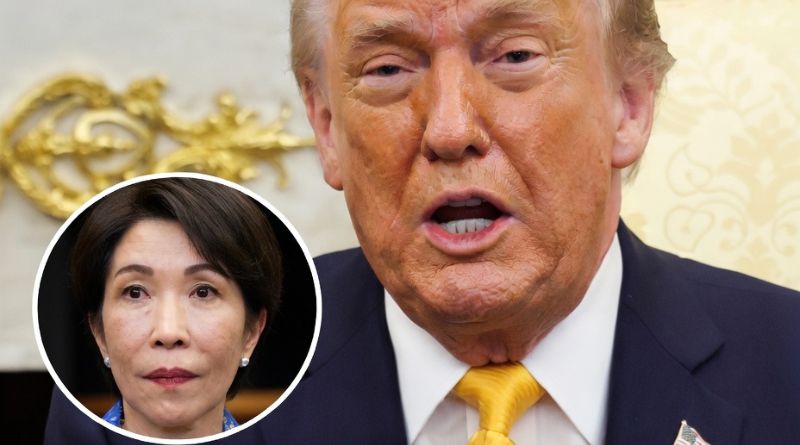
On March 19, 2026, a high-stakes diplomatic encounter at the White House took an unexpected turn when President Donald Trump made a controversial reference to the 1941 attack on Pearl Harbor. Hosting the newly elected Japanese Prime Minister Sanae Takaichi, Trump was intended to focus on bilateral security cooperation and the escalating military conflict in the Middle East. However, the session became dominated by a rhetorical exchange regarding the United States’ decision to launch strikes against Iran without prior notification to its Pacific allies.
The tension began when a Japanese journalist questioned the President on why Japan had been kept in the dark regarding recent U.S. military operations. These operations, conducted in coordination with Israel since late February, were designed to neutralize Iranian missile defenses and air capabilities. Trump justified the lack of communication by citing the necessity of operational secrecy and the element of surprise. In a moment that stunned those in attendance, he turned to Takaichi and remarked, “Who knows better about surprise than Japan? Okay? Why didn’t you tell me about Pearl Harbor?”
The invocation of the December 7, 1941, attack—which resulted in the deaths of over 2,400 Americans and remains a deeply sensitive historical touchstone—immediately shifted the atmosphere of the Oval Office. While some observers noted a brief ripple of uneasy laughter, the mood quickly turned somber. Prime Minister Takaichi, the first woman to lead the Japanese government, maintained a disciplined and professional posture. Though her expression was described as visibly tense, she refrained from a direct rebuttal, focusing instead on the broader strategic goals of the U.S.–Japan alliance.
The incident highlighted the complex historical baggage that continues to undercurrent modern diplomacy between Washington and Tokyo. Since the end of World War II, the two nations have transitioned from bitter adversaries to the closest of allies, bound by mutual defense treaties and shared interests in the Indo-Pacific. These ties are currently tested by the rising influence of China and the need for regional stability in the South China Sea and the Korean Peninsula. Trump’s remarks, however, served as a stark reminder of the potential for historical trauma to resurface in contemporary political discourse.
Domestically, the President’s comments sparked a polarized debate. Critics and diplomatic analysts argued that the comparison was a significant misstep, suggesting it risked trivializing a tragic chapter of history and alienating a key partner at a time when global unity is paramount. Conversely, Trump’s supporters defended the statement as an example of his signature candidness, viewing it as a blunt but effective way to emphasize the importance of unpredictability in modern warfare. They argued that the focus should remain on the tactical success of the Iran strikes rather than the nuances of presidential rhetoric.
Despite the awkwardness of the exchange, the meeting concluded with both leaders reaffirming their commitment to the alliance. They discussed ongoing efforts regarding economic sanctions, intelligence sharing, and joint military readiness. Prime Minister Takaichi praised the resilience of the bilateral relationship, signaling that the strategic necessity of the United States as a security partner outweighs the temporary discomfort caused by individual remarks. Nonetheless, the event underscores the delicate balance required in international relations, where the weight of the past often informs the volatility of the present.