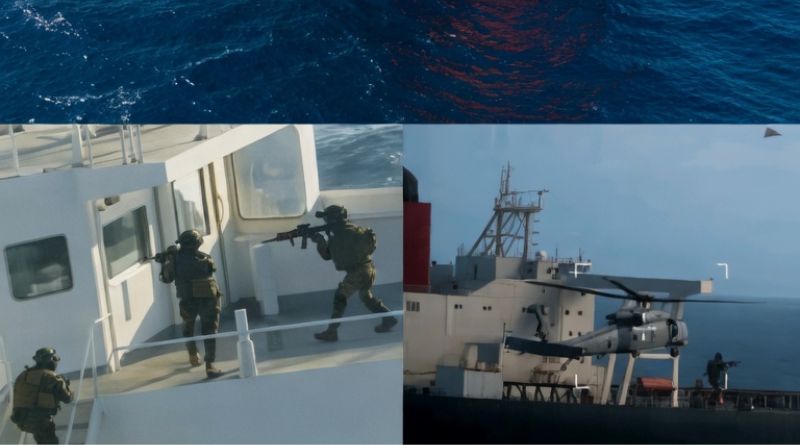
U.S. Military Intercepts Vessel in Routine Maritime Security Operation
A recent maritime security incident involving U.S. forces has captured attention in defense, national security, and international affairs circles. It underscores the critical role of naval surveillance and interdiction in today’s complex geopolitical landscape, where shipping lanes face threats from illicit trafficking, sanctions evasion, and other destabilizing activities.
According to initial statements from U.S. defense officials, American personnel conducted a controlled interception and secured a vessel during a coordinated operation in a sensitive maritime area. While unverified reports and speculation proliferated rapidly on social media, authorities stressed that the action formed part of standard security protocols aimed at safeguarding regional stability and protecting vital international waterways. Officials have released only basic details so far, cautioning against premature conclusions pending full assessment.
What Has Been Officially Confirmed
Defense sources confirmed that U.S. forces executed a maritime interdiction on a vessel flagged for further scrutiny under ongoing monitoring efforts. The operation wrapped up without broader escalation, and no civilian casualties were reported. Details beyond this remain limited: officials have withheld information on the vessel’s origin, ownership, registry, or any cargo involved. They also declined to specify whether detentions occurred, citing protocols for active investigations.
This cautious approach to public messaging aligns with evolving defense communication strategies designed to curb misinformation amid fast-moving events. It reflects a deliberate effort to balance transparency with the need to protect operational integrity.
Why Such Interceptions Are Routine
Maritime interdictions represent a standard element of modern naval and coast guard operations worldwide. Global trade relies heavily on sea routes, which are vulnerable to illegal activities including drug smuggling, unregulated fishing, arms trafficking, and attempts to circumvent international sanctions. The U.S. military, often in partnership with allies and the Coast Guard, maintains regular patrols to detect and evaluate vessels showing suspicious behavior.
These missions typically involve surveillance, boarding when warranted, and assessment to deter violations while ensuring the free flow of legitimate commerce. Historical examples, such as drug interdictions in the eastern Pacific or Caribbean by Navy and Coast Guard teams, demonstrate how these actions help disrupt transnational criminal networks without necessarily signaling wider conflict.
The Caribbean Sea, in particular, has long been a focus for such efforts due to its proximity to major trafficking routes. Operations there frequently target “go-fast” vessels or larger ships suspected of carrying narcotics or evading sanctions, contributing to broader homeland security objectives.
Rising Focus on Maritime Security
In recent years, oceans have emerged as key arenas for strategic competition and security challenges. Roughly 90 percent of global trade travels by sea, rendering shipping lanes essential infrastructure. Geopolitical tensions in various regions have heightened the need for naval forces to perform multiple roles: deterrence, intelligence gathering, and measured de-escalation.
Experts note that many interceptions are preventative, identifying potential risks early to prevent them from developing into larger threats. Advances in satellite tracking, intelligence sharing, and naval technology have significantly enhanced monitoring capabilities across expansive ocean areas. This infrastructure supports enforcement of international norms and rapid response to emerging hazards.
What Remains Undisclosed
Several critical aspects of the incident have not been made public, including the exact coordinates of the interception, the vessel’s full identity or flag status, the character of any onboard materials, and potential follow-on legal measures. Such restraint is typical in national security contexts. Releasing sensitive information too soon could compromise ongoing probes, expose tactical methods, or complicate diplomatic relations.
U.S. agencies generally provide fuller accounts only after thorough internal reviews, coordination with partners, and confirmation that disclosure poses no risk to personnel or future operations.
The Influence of Social Media and Speculation
Despite sparse official details, the event sparked immediate online debate. Social media amplified unverified claims, sometimes assigning specific motives or locations without supporting evidence. Analysts caution that such viral narratives risk distorting facts, amplifying public anxiety, or triggering unwarranted economic or political ripples.
In national security matters, incomplete information can spread faster than verification. Experts consistently recommend prioritizing statements from official channels and established reporting over speculation.
The Need for Measured Interpretation
Specialists in international law and defense policy highlight that maritime interceptions happen frequently across the globe and rarely indicate escalation. Many conclude quietly once a vessel is cleared or addressed according to protocol. Rushing to interpret early, fragmentary reports as harbingers of conflict can mischaracterize routine procedures.
This incident fits within a larger pattern of U.S. efforts to counter illicit maritime activity, particularly in the Caribbean and surrounding regions. Whether involving drug interdictions or sanctions enforcement, these actions aim to uphold rules-based order at sea.
Economic and Strategic Dimensions
Maritime security directly impacts global economic stability. Interruptions to shipping can ripple through energy supplies, logistics chains, and international markets. Consequently, stakeholders in defense, trade, and cybersecurity track naval developments closely. Even standard operations can subtly influence sentiment in related sectors.
Sustained investment in naval readiness and intelligence reflects the high stakes. Resources allocated to these capabilities enable effective risk management while favoring restraint over unnecessary force—a hallmark of contemporary strategy.
Limits of Real-Time Transparency
Public curiosity about military activities is natural, yet complete openness during operations is not always feasible. Protecting service members, preserving alliances, and maintaining future effectiveness often require withholding details temporarily. Comprehensive updates typically follow when risks diminish.
Looking Ahead
Assessments of the incident continue, with officials signaling that additional verified information will emerge through appropriate channels as reviews progress. This may include coordination with international allies or relevant legal processes.
In the interim, defense observers advise patience and a focus on confirmed facts. Not every vessel interception portends crisis; many represent everyday vigilance in a heavily monitored maritime domain.
The incident serves as a reminder of the fragile equilibrium in global waterways: constant surveillance paired with efforts to avoid unnecessary confrontation. As technologies and threats evolve, such operations will likely persist as an underappreciated but essential tool for preserving stability at sea.
In an age of instant communication, the value of waiting for verified details cannot be overstated. This event exemplifies how routine security measures can attract outsized interest precisely because information now outpaces confirmation. Grounding analysis in facts helps ensure informed public discourse on matters vital to national and international security.


