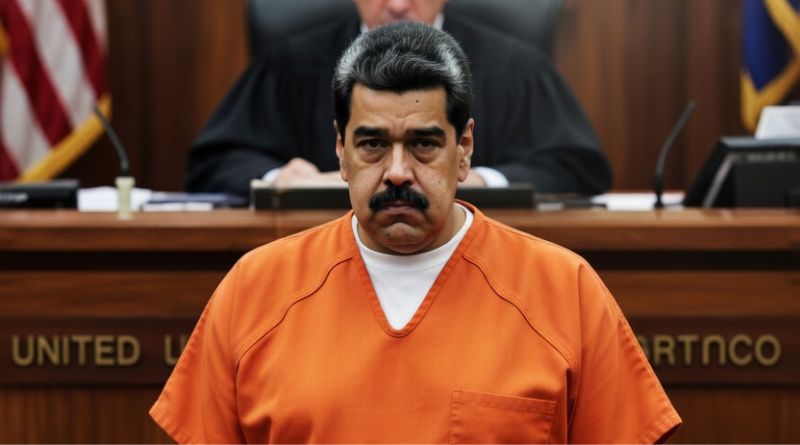
The raid involved elite U.S. special forces, supported by airstrikes on military targets around Caracas, surveillance drones, and stealth aircraft. Forces breached Maduro’s compound, detaining him and his wife, Cilia Flores, with minimal U.S. casualties. The pair was swiftly extracted and flown to New York to face long-standing federal charges of narco-terrorism, drug trafficking, and corruption. The Trump administration described the mission as a targeted law-enforcement action to enforce U.S. indictments, emphasizing its limited scope: no troops remained on Venezuelan soil afterward.
Critics, however, argued that the scale of the operation—including suppression of air defenses and violation of Venezuelan sovereignty—amounted to an act of war rather than routine policing. International law experts condemned the unilateral removal of a sitting head of state without UN Security Council approval or broad regional support, warning it sets a dangerous precedent that could erode global norms on sovereignty and the use of force. Domestically, the raid ignited questions about whether such cross-border actions bypass constitutional checks and balances.
Senate Showdown Over War Powers
Tensions peaked in the Senate with a bipartisan War Powers Resolution led by Senators Tim Kaine (D) and Rand Paul (R), among others. The measure sought to require congressional authorization for any further U.S. military actions in Venezuela, reflecting fears that the Maduro operation blurred the line between law enforcement and armed conflict.
Debate was fierce. Proponents like Paul contended that forcibly seizing a foreign leader, regardless of criminal charges, constitutes hostilities under the Constitution. Kaine and allies stressed that labeling the raid “law enforcement” ignored its military character and geopolitical implications. Opponents countered that the president, as commander-in-chief, holds broad discretion to neutralize threats to national security, such as Maduro’s alleged role in narcotics trafficking destabilizing the region. They noted the operation’s brevity and lack of sustained U.S. presence.
On January 14, after an earlier procedural advance of the resolution, the Senate reached a 50-50 tie on the final measure. Vice President J.D. Vance cast the tie-breaking vote to block it, preserving executive flexibility. Several Republican senators who had initially supported oversight reversed course amid White House pressure, exposing rifts within the GOP over congressional prerogatives versus operational agility.
Constitutional and Legal Tensions
At the core is the War Powers Clause: Congress alone can declare war, yet modern presidents routinely claim inherent authority for limited actions protecting U.S. interests. The 1973 War Powers Resolution, born from Vietnam-era concerns, requires notification and authorization for prolonged conflicts—but administrations have often contested its reach, especially for short, precision raids.
Supporters of the Maduro operation argue it fell outside traditional “hostilities,” citing its discrete nature and focus on executing arrest warrants. Delaying for approval, they say, risked operational failure. Critics view it as executive overreach, bypassing the framers’ intent for shared powers and potentially normalizing unilateral interventions against sovereign nations.
The controversy echoes historical cases, such as the 1980 Iran hostage rescue attempt under Carter, Obama’s 2011 Libya airstrikes, and targeted counter-ISIS operations. Each tested the balance between security needs and legislative checks in evolving warfare.
Broader Implications
Internationally, the raid drew condemnation from Latin American nations and bodies like the UN, with protests at U.S. embassies and concerns over precedent for extraterritorial abductions. In Venezuela, acting President Delcy Rodríguez assumed power amid shifting politics, while the U.S. engaged diplomatically to stabilize the transition, including oil-related discussions.
Domestically, the episode deepened partisan divides. Many Americans back bringing a indicted trafficker to justice, yet polls reflect unease with bypassing Congress on sovereign interventions. The narrow Senate vote underscored fragile institutional trust.
As legal challenges potentially head to court and lawmakers consider new oversight bills, the Maduro raid stands as a pivotal test. It highlights tensions between decisive action in a fast-paced world and the constitutional safeguards designed to prevent concentrated power. Whether this becomes a blueprint for future operations or prompts renewed checks remains an open question—one that will influence U.S. governance, foreign policy, and global norms for years ahead.