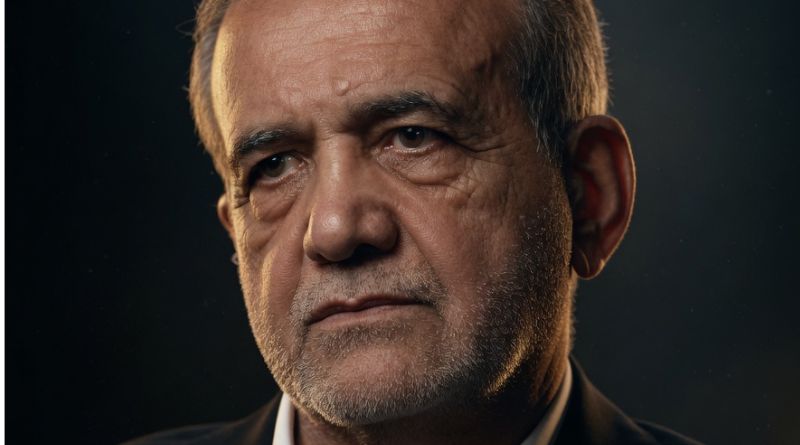
In a dramatic public appeal released just before an anticipated national address by Masoud Pezeshkian, Iran’s president issued a lengthy letter directed not to governments, but to ordinary Americans—framing Iran’s position as defensive, rejecting accusations that Tehran seeks confrontation, and placing responsibility for rising tensions squarely on the United States.
The message arrived during a period of heightened anxiety across the region, with military threats, economic pressure, and diplomatic breakdowns fueling fears that a broader conflict could emerge. In his statement, Pezeshkian argued that Iran has been consistently portrayed as a danger through what he described as politically constructed narratives designed to justify foreign pressure and military buildup.
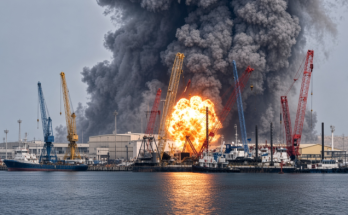
He warned that attacks on Iran’s core infrastructure—especially energy, industrial, and civilian facilities—carry consequences far beyond immediate battlefield calculations. According to the letter, strikes on such targets directly harm ordinary citizens and risk creating instability that could spread throughout the wider region and beyond. He said the destruction of facilities tied to energy production or public services should not be viewed merely as military pressure but as actions that deepen human suffering and leave long-term political scars.
A particularly forceful line in the letter stated that attacks on Iran’s vital infrastructure effectively target the Iranian people themselves, adding that such actions amount to more than strategic operations and could leave lasting resentment for years. He argued that bombing key sectors of national life would increase both economic hardship and political instability, while also reinforcing distrust toward those responsible.
Throughout the message, Pezeshkian repeatedly returned to one central historical argument: that Iran has not initiated war in modern times despite facing invasion, sanctions, and foreign pressure. He described Iran as one of the world’s oldest continuous civilizations, emphasizing that despite its geographic position and military capacity, the country has not pursued expansion, colonial control, or domination of neighboring states in modern history.
He also stressed that Iranians distinguish between foreign governments and foreign populations, saying hostility toward political decisions should not be confused with hostility toward ordinary people in countries such as the United States, European nations, or neighboring regional states. According to his letter, this distinction reflects a long-standing cultural principle rather than a temporary political slogan.
The Iranian president argued that the image of Iran as a global threat has been shaped largely by strategic interests. In his view, powerful nations often require an enemy to justify military presence, arms production, and control over critical geopolitical markets. He suggested that when no immediate threat exists, one is politically constructed to support those goals.
He pointed specifically to the heavy American military presence surrounding Iran, noting that U.S. forces and bases remain concentrated across the region despite Iran, as he described it, never launching war against the United States since the country’s founding. In that context, he defended Iran’s military preparedness as a response to encirclement rather than aggression.
According to Pezeshkian, Iran’s investment in defense should be understood as a measured form of self-protection rather than preparation for expansion. He argued that no nation confronted by such a military environment would willingly remain strategically vulnerable.
A major section of the letter revisited the history of U.S.-Iran relations, identifying the 1953 Iranian coup d’état as the defining turning point that transformed earlier non-hostile ties into long-term distrust. He described that intervention as an illegal effort to block Iran’s attempt to nationalize its own resources and said it interrupted democratic development while restoring authoritarian rule.
From there, he traced a chain of grievances that included American support for the former Shah, backing for Saddam Hussein during the Iran-Iraq war, decades of sanctions, and more recent military actions that he said occurred even during diplomatic negotiations.
Yet the letter also argued that pressure has not broken Iran internally. Pezeshkian cited national development indicators to claim that Iran has strengthened despite isolation. He referenced major gains in literacy, education, healthcare, and infrastructure, presenting these as evidence that the country has continued to advance even under sanctions.
He noted that literacy levels have risen dramatically over the decades, while universities, scientific institutions, and technological sectors have expanded. According to his argument, these measurable changes challenge what he described as distorted portrayals of Iranian society abroad.
At the same time, he acknowledged that sanctions and military threats have exacted a serious human cost. He said ordinary families continue to absorb the burden of inflation, shortages, disrupted services, and uncertainty, while repeated threats of conflict shape public attitudes in ways that cannot easily be reversed.
The letter questioned whether current military pressure actually serves American public interests. Pezeshkian asked what practical benefit ordinary Americans gain from another conflict and whether Iran has presented any direct threat that would justify further escalation.
He specifically criticized attacks that, in his words, harm children, damage medical facilities, and disrupt treatment centers, arguing that such actions weaken America’s international standing more than they strengthen security. He suggested that rhetoric celebrating destruction only deepens global criticism rather than producing strategic results.
Another major point focused on diplomacy. Pezeshkian argued that Iran entered negotiations in good faith, accepted agreements, and fulfilled obligations, while later decisions to withdraw and escalate came from Washington. Though he did not name every agreement directly, the reference clearly pointed toward the collapse of previous nuclear understandings and the return of confrontation.
He said abandoning negotiated frameworks in favor of military pressure has repeatedly failed to create lasting solutions and instead intensified mistrust on all sides.
The letter also sharply criticized Israel, accusing it of shaping American decisions by amplifying perceptions of Iranian danger. Pezeshkian argued that Israel benefits strategically when global focus shifts away from Palestinian suffering and toward confrontation with Iran.
He claimed that portraying Iran as an existential threat allows Israeli leadership to redirect international attention while encouraging the United States to bear the military and financial burden of confrontation.
In one of the most politically pointed passages, he questioned whether the slogan associated with Donald Trump—“America First”—is truly reflected in policies that could draw the United States deeper into conflict abroad.
Toward the end of the message, Pezeshkian appealed directly to Americans to look beyond official narratives and examine Iranian society through personal observation, travel, and the success of Iranian immigrants abroad. He pointed to Iranian scholars, scientists, and engineers working in leading universities and technology companies across Western countries as evidence of a society often misunderstood internationally.
His closing message framed the current moment as a historic choice between confrontation and engagement. He argued that continued escalation offers only higher costs and no durable outcome, while dialogue remains difficult but necessary.
Ending on a civilizational note, he said Iran has endured many external pressures over centuries and remains standing long after earlier aggressors disappeared into history—asserting that resilience, rather than retreat, defines the nation’s identity today.