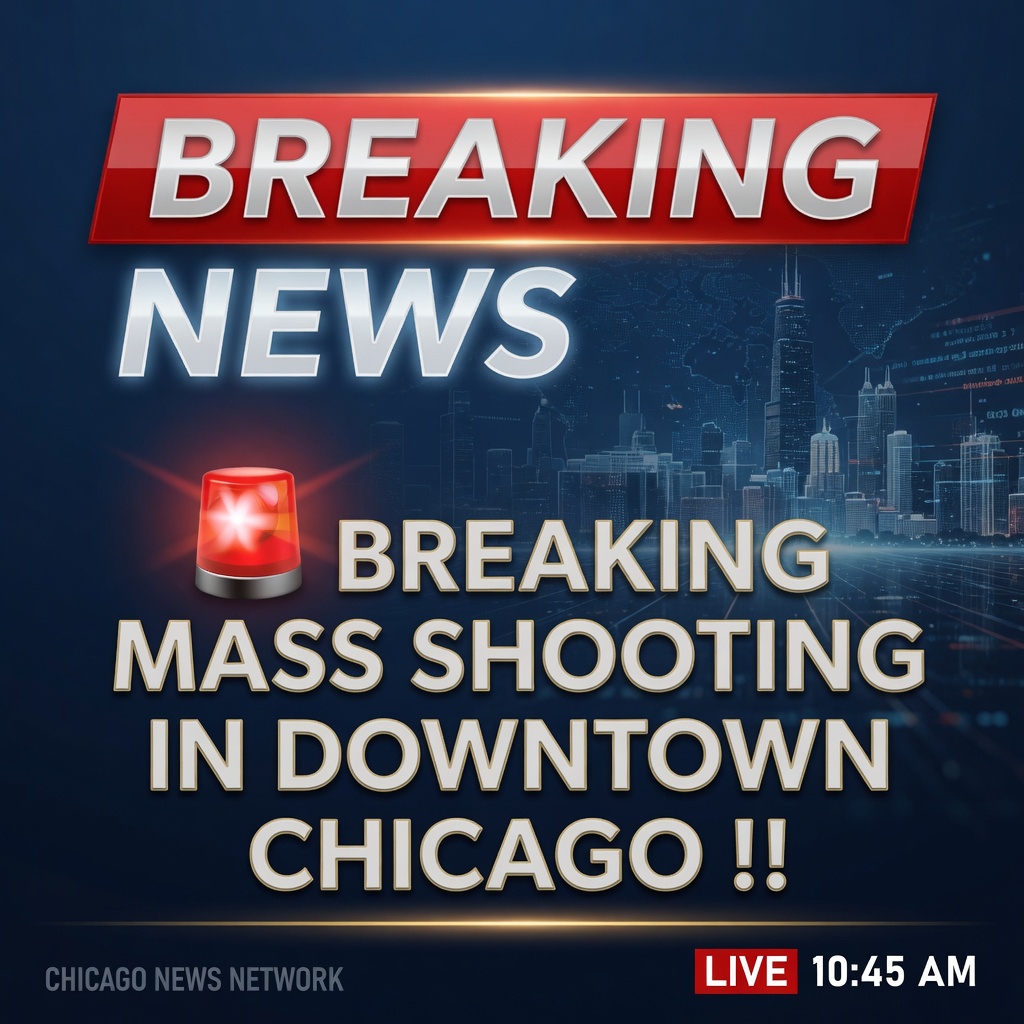
It happened in an instant. One moment, downtown Chicago pulsed with its usual energy: crowded sidewalks filled with commuters heading home, tourists snapping photos near iconic landmarks, and the steady hum of conversations, traffic, and distant music. The city rarely pauses, and on this evening—hours after the annual Christmas tree lighting in Millennium Park—the atmosphere felt festive and alive.
Then, the rhythm shattered.
Sharp, explosive sounds ripped through the air. At first, some dismissed them or froze in confusion, unsure what they were hearing. Recognition hit like a wave: gunfire. Chaos erupted immediately.
People scattered in every direction—not in coordinated panic, but raw instinct. Families clutched children, friends yanked one another forward, and strangers moved as one, fleeing the unseen threat. Near Millennium Park and the bustling Loop, what had been an open, welcoming public space turned tense and surreal within seconds. People ducked behind barriers, storefronts, anything offering a sliver of cover.
It didn’t feel real until it was already unfolding. Some later called it overwhelming; others described the disorienting shift from normalcy to fear.
Emergency calls flooded in almost immediately. Sirens wailed as police responded swiftly, securing the area, closing streets, and guiding people to safety. Within minutes, the scene transformed into an active investigation zone. Tactical teams joined the response, and the downtown core remained locked down while authorities urged the public to stay away.
Officials confirmed multiple shootings tied to large groups of teenagers in the area. In total, nine teens were shot: seven wounded near the Chicago Theater shortly after 9:50 p.m., and two more—including a 14-year-old boy fatally shot—in a separate incident nearby. Medical teams treated victims on site and rushed the injured to hospitals with urgent efficiency.
As the situation developed, information remained limited and fluid. Early reports linked the violence to so-called “teen takeovers” following the holiday event, though full details were still emerging. Investigations take time, and authorities stressed patience to avoid speculation outpacing facts.
Social media filled rapidly with eyewitness videos and accounts—fragments of screams, running crowds, and the urgent aftermath—each adding raw perspective to how quickly everyday life can fracture.
For those present, the randomness was hardest to process. There was no warning, no clear buildup—just a sudden interruption that stripped away any illusion of control. Downtown spaces are meant to feel shared and safe, places where people gather without hesitation. When violence intrudes, it ripples outward, shaking not only those directly affected but the broader sense of security that communities rely on.
This incident adds to ongoing conversations about urban safety, prevention, and providing better alternatives for youth in the city. For victims and families, the immediate focus is survival and recovery. For the city, it’s about thorough investigation and strengthening responses to keep public spaces secure.
Ultimately, events like this linger. They challenge assumptions about routine and predictability, leaving a quiet awareness that the ordinary can shatter without notice. In familiar streets, amid holiday lights and crowds, normal can become anything but—in a single, unforgiving moment.