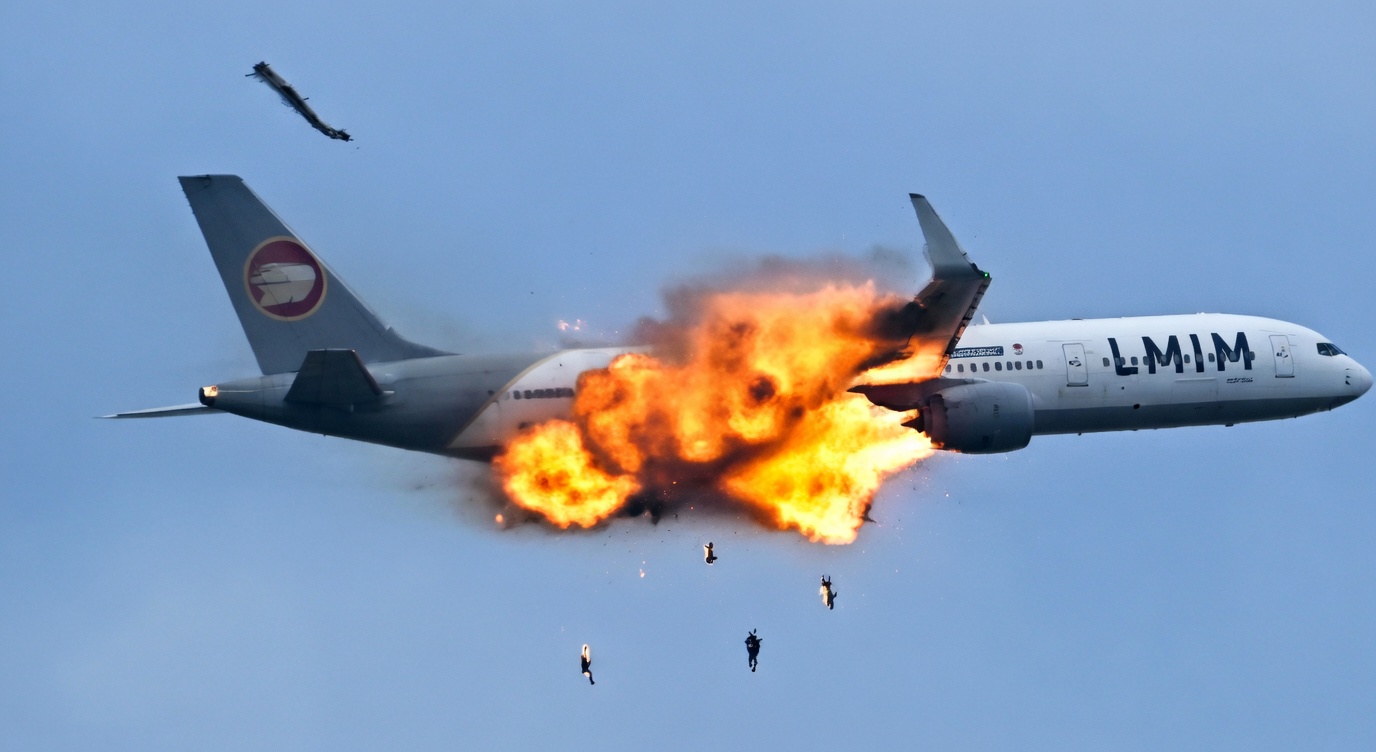
Tragic Aviation Disaster: Airliner Carrying Over 240 People Crashes Shortly After Takeoff
A devastating aviation accident involving a commercial passenger jet with more than 240 people on board has shocked the world. The plane, identified as an Air India Boeing 787 Dreamliner operating as Flight 171 from Ahmedabad to London, crashed just moments after takeoff on June 12, 2025. Early reports indicate the aircraft reached only about 625 feet before it began losing altitude and plummeted into a medical college hostel near the airport perimeter in Ahmedabad, India.
The incident resulted in catastrophic loss of life. Of the 242 people aboard—230 passengers and 12 crew members—241 are confirmed dead, according to official statements from Air India and local authorities. A single passenger, a British national, survived and is receiving medical treatment. The crash also claimed additional lives on the ground, with reports confirming at least five medical students killed in the hostel building. Passengers included nationals from India, the United Kingdom, Portugal, and Canada.
Emergency services responded immediately, with rescue teams focusing on locating survivors, securing the site, and providing medical aid. Thick smoke and scattered debris complicated initial efforts, but authorities quickly established a perimeter to preserve evidence for investigators.
Ongoing Investigation
A joint investigation involving Indian aviation authorities, the U.S. National Transportation Safety Board (NTSB), and Boeing is now underway. Teams are examining multiple potential factors, including mechanical failure, bird strikes, weather conditions, and pilot actions. Both the flight data recorder and cockpit voice recorder (the “black boxes”) have been recovered and sent for detailed analysis.
At this early stage, officials are urging caution against speculation. “We must allow the investigation to proceed without interference,” a spokesperson emphasized. Families of those on board have been notified, and counseling services have been activated to support them during this difficult time.
Standard Aviation Investigation Process
Aviation accident probes follow a rigorous, methodical protocol designed to uncover facts and prevent recurrence:
- Immediate response: Secure the crash site, treat survivors, and protect wreckage from tampering or weather damage.
- Recorder recovery: Analyze black box data for critical flight parameters and cockpit conversations.
- Physical examination: Study wreckage distribution, engine components, and structural failures.
- Witness and data collection: Gather accounts from air traffic control, radar records, and any available witnesses.
- Laboratory testing: Conduct forensic analysis on fuel, electronics, and mechanical parts.
- Final report: Publish findings with probable cause and safety recommendations, often after 12–18 months.
This thorough approach prioritizes accuracy over speed. Historical cases demonstrate that detailed investigations have led to vital improvements in aircraft design, pilot training, and operational procedures.
Global Attention and Aviation Safety
Commercial aviation remains one of the safest modes of transportation, thanks to redundant safety systems, strict maintenance regimes, and highly trained crews. Nevertheless, incidents of this magnitude command international attention because they involve hundreds of lives and raise questions about systemic vulnerabilities.
In the coming days and weeks, preliminary updates are expected as verified information emerges. Regulators may issue temporary safety directives if patterns or urgent risks are identified. The public and affected families deserve transparent communication from official channels.
For the latest reliable information, monitor sources such as the NTSB (ntsb.gov), India’s Directorate General of Civil Aviation, or the International Civil Aviation Organization (icao.int).
Looking Ahead
Tragedies like this underscore that aviation safety is an ongoing commitment. Every incident, no matter how rare, drives advancements aimed at ensuring zero accidents. As the investigation progresses, the aviation community will analyze lessons learned to strengthen protocols worldwide.
Our thoughts are with the victims, their families, the survivor, the crew, and all first responders working at the scene. Further details will be shared as they become available.