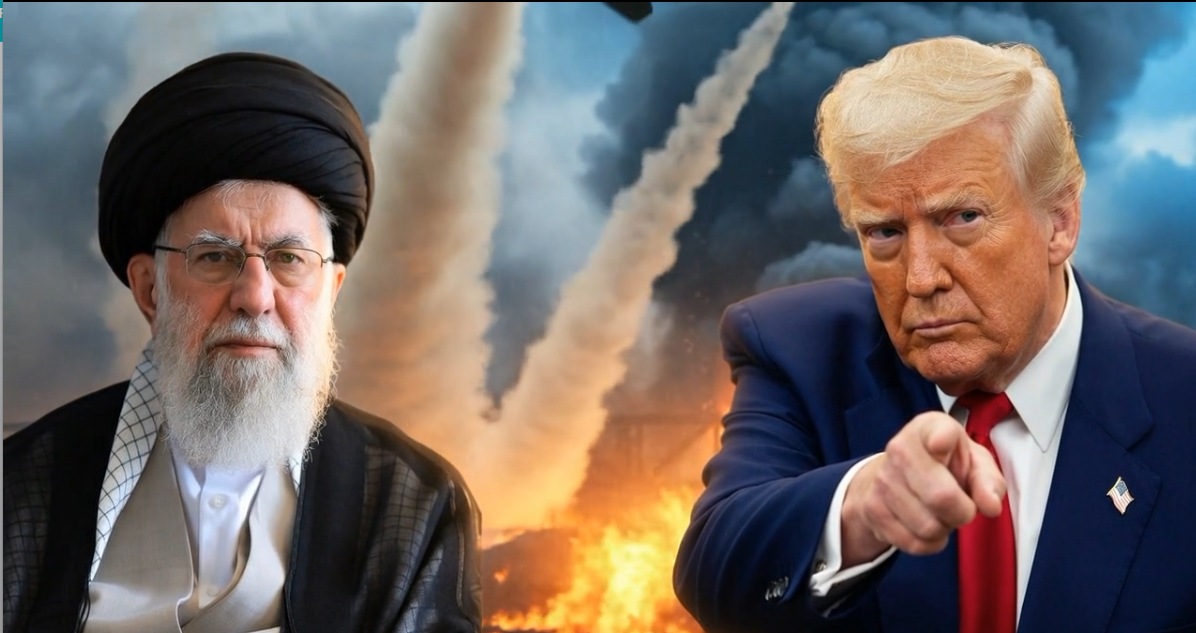
President Donald Trump announced during a Monday press conference that he personally ordered the U.S. military strike that destroyed Iran’s newly constructed B1 Bridge in Karaj last Thursday. The attack came after Iranian negotiators, according to Trump, reneged on a near-complete deal to end the ongoing conflict with the United States and Israel.
The B1 Bridge, one of the largest and tallest infrastructure projects in the region at 136 meters high and valued at around $400 million, was an unfinished suspension bridge linking Tehran to Karaj and intended to improve connections toward the Caspian Sea. It was slated to open later this year. U.S. officials described the bridge as a legitimate military target, arguing it could facilitate the transport of weapons, missiles, and other war-making materials to western Iran.
Iranian sources reported that the strike occurred while civilians were gathered nearby for celebrations marking the final day of Nowruz (Sizdah be-dar, or Nature Day). Initial accounts indicated at least eight people were killed and approximately 95 to 100 others injured, though independent verification remains limited. Some reports mentioned a possible second strike as first responders arrived.
In the press conference, Trump recounted that his negotiating team, led by Vice President JD Vance, informed him the Iranians were breaking the emerging agreement. “We were very close to a deal,” he said. He recalled instructing them: “Tell them, that’s okay. Don’t worry about it. But tell them to look out their window and watch.” Trump added that within 45 minutes he gave the order to destroy the bridge, and “within 10 minutes after I gave that order, that bridge was over.”
Shortly after the strike, Trump posted video footage of the dramatic collapse on Truth Social, accompanied by the message: “The biggest bridge in Iran comes tumbling down, never to be used again — Much more to follow! IT IS TIME FOR IRAN TO MAKE A DEAL BEFORE IT IS TOO LATE, AND THERE IS NOTHING LEFT OF WHAT STILL COULD BECOME A GREAT COUNTRY!”
Trump has framed the broader U.S.-Israeli military campaign as highly successful, claiming it has severely degraded Tehran’s military capabilities and is nearing completion of core strategic objectives. In addresses and remarks throughout Monday, he warned that American forces would continue hitting Iran “extremely hard” over the next two to three weeks. He has repeatedly threatened to target additional infrastructure, including power plants and more bridges, if Iran does not comply with U.S. demands.
Central to the current impasse is the Strait of Hormuz, a critical global oil transit route that Iran has restricted. Trump issued a deadline—reportedly 8 p.m. Eastern Time on Tuesday—for Iran to fully reopen the strait to civilian tanker and shipping traffic. Failure to do so, he warned, could trigger rapid, large-scale U.S. strikes on Iranian infrastructure.
Iran has rejected temporary cease-fire proposals conveyed through intermediaries. Tehran insists that any lasting peace requires the U.S. and Israel to halt all strikes, provide guarantees against resumption, and offer compensation for damages. Iranian officials have also stated that any settlement must leave Iran in control of the strait, allowing it to impose fees on passing ships. In response to the pressure, Iran has threatened to strike infrastructure in Gulf neighboring countries and claimed fresh attacks on a ship in the Gulf and Saudi facilities linked to U.S. interests.
Democrats and some international observers have criticized the strike on the B1 Bridge as a potential war crime, citing international law and the Geneva Conventions’ protections for civilian infrastructure. Trump has dismissed such concerns, asserting that America is “winning bigger than ever” and that Iran must choose between making a deal or facing further devastation.
The situation remains fluid, with diplomacy stalled and the risk of escalation high as Trump’s deadline approaches.