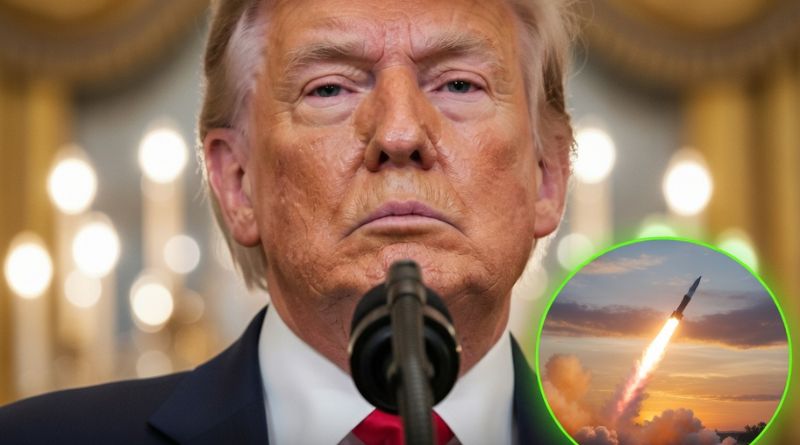
President Donald Trump’s recent warning that Iran could be “taken out in one night” has intensified global concerns over escalating tensions in the Middle East. Speaking at a press conference on April 6, 2026, Trump declared, “The entire country can be taken out in one night – and that night might be tomorrow night,” while setting a tight deadline for Iran to reopen the Strait of Hormuz. He outlined U.S. plans to target key infrastructure, including bridges, power plants, and energy facilities, if demands went unmet.
The remarks came amid a broader conflict that erupted on February 28, 2026, when U.S. and Israeli forces launched major strikes on Iran, resulting in the death of Supreme Leader Ali Khamenei and significant damage to Iranian military and leadership structures. In response, Iran restricted access through the Strait of Hormuz—a narrow waterway critical for global energy supplies, handling roughly 20% of the world’s oil and natural gas trade. Prolonged disruptions have driven oil prices higher and raised fears of broader economic fallout.
Trump’s language reflects his signature negotiating approach: combining high-stakes deadlines with forceful rhetoric to apply maximum pressure. Some analysts view the statements as strategic signaling aimed at deterring Iran, reassuring allies like Israel, and pushing for concessions on nuclear issues, missile programs, and regional proxy activities. Others interpret it as domestic political messaging. The deliberate ambiguity leaves room for interpretation while preserving leverage.
On April 7–8, a two-week ceasefire was announced, brokered with Pakistani involvement and reportedly influenced by China. The truce includes pauses in major U.S. and Israeli strikes, contingent on Iran allowing commercial shipping to resume through the Strait of Hormuz. Iran has accepted the deal in principle, with follow-on negotiations scheduled in Islamabad. However, the agreement remains fragile. As of April 9, shipping traffic stays heavily restricted, with only a handful of vessels permitted passage. Iran has cited alleged Israeli violations in Lebanon as justification for continued limits, while oil futures have climbed back toward $100 per barrel amid uncertainty.
Public reactions, especially online, have often veered into alarmist territory, with speculation about nuclear escalation or total war. Yet credible assessments indicate the conflict has remained conventional so far, with no confirmed moves toward nuclear options. The anxiety stems more from the convergence of strong rhetoric, high economic stakes, and ongoing proxy clashes than from any immediate policy shift.
History demonstrates that such crises frequently de-escalate through back-channel diplomacy, third-party mediation, and mutual interest in avoiding wider catastrophe. Major military operations require extensive planning, allied coordination, and risk evaluation that go far beyond any single statement. While the short two-week window adds urgency, the gap between bold words and irreversible action remains significant.
Distinguishing rhetorical escalation from actual decision-making is crucial. As developments unfold—particularly around ceasefire compliance and strait access—verified updates will matter more than isolated quotes. Diplomatic channels continue to offer pathways to stabilize the region and protect global energy flows, underscoring the need for calm analysis amid heightened tensions.