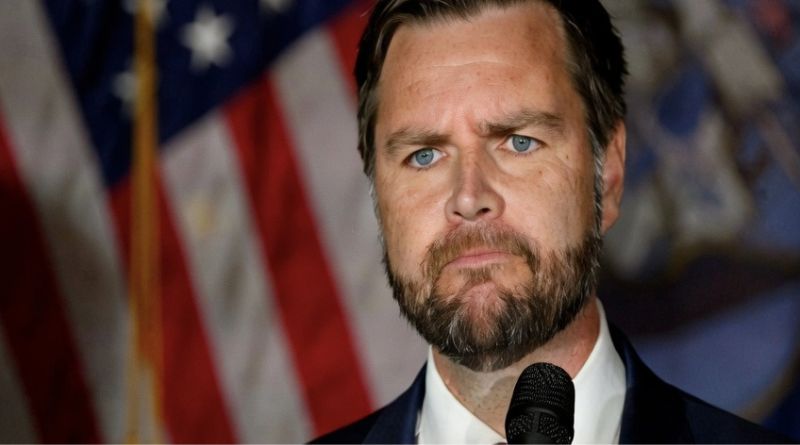
Vice President JD Vance warned Iran of severe consequences while speaking alongside Hungarian Prime Minister Viktor Orbán in Budapest on Tuesday, as a U.S.-set deadline loomed for a ceasefire deal.
“We feel confident that we can get a response, whether it’s positive or negative, we’re gonna get a response from the Iranians by 8 o’clock tonight,” Vance said. He stressed the desire for a world where oil and gas flow freely, allowing people to heat and cool their homes and commute to work without disruption.
“That’s not gonna happen if the Iranians are engaged in acts of economic terrorism,” Vance continued. “They’ve got to know, we have tools in our toolkit that we so far haven’t decided to use. The president of the United States can decide to use them, and he will decide to use them if the Iranians don’t change their course of conduct.”
The remarks came amid escalating tensions over the Strait of Hormuz, a vital chokepoint that once carried roughly one-third of global oil exports. Iran closed or severely restricted the waterway in retaliation for U.S.-Israeli strikes that began in late February 2026, causing traffic to drop by up to 90 percent and triggering volatility in energy markets.
A week earlier, President Donald Trump announced that Iran had agreed to allow additional oil tankers through the strait — first 10 vessels, then expanded to 20 more — describing the move as a “tribute” to the United States during ongoing negotiations. “They gave us… 20 boats of oil. Big, big boats going through the Hormuz Strait,” Trump said aboard Air Force One. “That’s taking place starting tomorrow morning.”
Trump had repeatedly issued ultimatums, including a 10-day extension and a 48-hour warning. On Truth Social, he declared, “Time is running out — 48 hours before all Hell will reign down on them,” and later posted simply, “Tuesday, 8 P.M. Eastern Time!” He threatened to “obliterate” Iran’s power plants and other infrastructure if the strait remained closed or no ceasefire was reached. The latest escalation followed Iran’s downing of two U.S. aircraft on Friday, though all pilots and crew were rescued.
Hours before or as the deadline passed on Tuesday evening, the United States and Iran announced a two-week ceasefire. The agreement included provisions for limited reopening of the Strait of Hormuz, with allowances for Iran and Oman to charge fees on transiting ships — a point of contention, as the passage had long been treated as an international waterway.
The following day, Vance described the deal as a “fragile truce”. He noted positive signals from Iran’s foreign minister but accused some Iranian officials of “lying” about aspects of the agreement. Vance clarified that the ceasefire does not extend to Lebanon or Hezbollah, despite Iranian expectations of a broader pause, calling any such assumption a “legitimate misunderstanding.” He added that U.S. military objectives had largely been met, while maintaining leverage through military, diplomatic, and economic tools.
Negotiations are set to continue, with a U.S. delegation led by Vance reportedly heading to Islamabad for further talks. Global energy markets reacted with relief, though questions remain about the truce’s durability amid ongoing regional tensions and internal Iranian divisions.