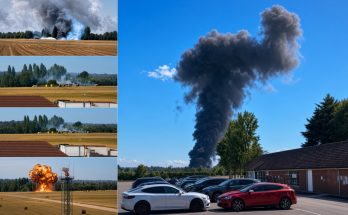
In a sharp escalation of the ongoing 2026 Iran war, Iran has intensified its ballistic missile campaign against Israel, launching multiple waves targeting Tel Aviv and surrounding areas with controversial cluster munitions. Tehran has justified these strikes as retaliation for the assassination of senior security officials, including Ali Larijani, head of the Supreme National Security Council. The use of cluster warheads—each dispersing dozens of submunitions over wide areas—has drawn widespread international condemnation for their indiscriminate effects on civilian populations.
Reports confirm that Iranian missiles carrying cluster payloads have struck or scattered bomblets across central Israel, affecting densely populated neighborhoods in Tel Aviv, Ramat Gan, Petah Tikva, Bnei Brak, Givatayim, and nearby cities. Incidents have caused structural damage to buildings, infrastructure like train stations, and residential areas. Fatalities include families killed by collapsing structures or direct impacts, with additional injuries from submunitions and falling debris. Israeli emergency services have responded to dozens of impact sites per barrage, some covering several square miles. While Israel’s multi-layered defenses, including the Iron Dome and Arrow-3 systems, have intercepted many incoming threats, cluster munitions complicate interception by breaking apart mid-air and spreading smaller explosives.
The conflict, which erupted on February 28 with joint U.S.-Israeli strikes on Iranian targets (codenamed Operation Epic Fury by the U.S.), has rapidly expanded. Iran has extended operations across the Gulf, firing missiles and drones at U.S. military bases and allied facilities in Kuwait, Bahrain, the United Arab Emirates, and Saudi Arabia. These attacks targeted energy infrastructure, ports, and air bases, causing limited damage in some cases while triggering widespread interceptions and civilian risks from debris. In response, the United States and Israel have conducted extensive counter-strikes—numbering in the thousands—against Iranian air defenses, missile production sites, IRGC installations, and nuclear-related facilities such as enrichment sites and heavy water plants. These operations have significantly degraded Iran’s capabilities but have not fully eliminated its nuclear or missile programs.
The escalation has strained regional stability and global energy markets. Attacks near the Strait of Hormuz and on oil and gas facilities have sparked volatility in oil prices and fears of broader supply disruptions. Humanitarian concerns have mounted, with civilian casualties reported on multiple sides and accusations of violations of international humanitarian law.
As of mid-April 2026, a fragile two-week ceasefire between the U.S., Iran, and Israel—brokered with Pakistani involvement—took effect around April 8. However, the pause remains tenuous, with disputes over its scope (particularly regarding Israeli operations against Hezbollah in Lebanon), continued diplomatic talks in Pakistan yielding limited progress, and both sides signaling readiness to resume operations if conditions are unmet. Israel’s defenses continue to face pressure from evolving Iranian tactics, while the broader risk of a full-scale regional war persists amid stalled negotiations on nuclear issues, security guarantees, and reparations.
This dangerous chapter underscores the conflict’s high stakes, with profound implications for civilian lives, energy security, and international order in an already volatile Middle East.