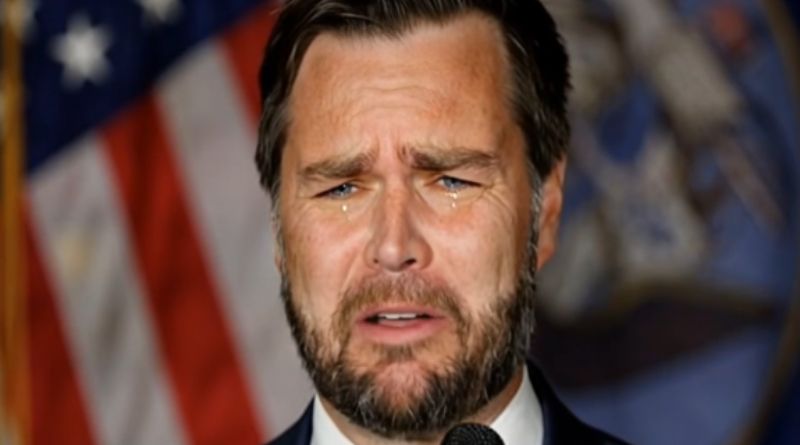
Vice President JD Vance issued a stern warning to Iran about potential “severe consequences” while appearing alongside Hungarian Prime Minister Viktor Orbán in Budapest on Tuesday, April 7, 2026, as a U.S.-imposed deadline for a ceasefire loomed large.
Speaking at a rally supporting Orbán’s reelection bid ahead of Hungary’s parliamentary vote on April 12, Vance expressed confidence that Washington would receive a response—positive or negative—from Tehran by 8 p.m. Eastern Time that evening. He underscored the U.S. desire for uninterrupted global energy flows, stating that ordinary people should be able to heat and cool their homes and commute to work without disruption caused by conflict.
“That’s not going to happen if the Iranians are engaged in acts of economic terrorism,” Vance declared. He emphasized that the United States possessed unused “tools in our toolkit,” adding that President Donald Trump would not hesitate to deploy them if Iran failed to alter its behavior.
The remarks came amid heightened tensions over the Strait of Hormuz, the narrow chokepoint through which roughly one-third of global oil exports normally pass. Following U.S.-Israeli military strikes on Iran that began in late February 2026, Tehran closed or severely restricted the waterway in retaliation. Oil traffic reportedly plummeted by up to 90 percent, triggering sharp volatility in energy markets and raising fears of a broader economic shock.
A week earlier, Trump had announced that Iran agreed to permit a limited number of additional oil tankers through the strait—initially 10 vessels, later expanded to 20—describing the concession as a “tribute” to the United States. “They gave us… 20 boats of oil. Big, big boats going through the Hormuz Strait,” Trump said aboard Air Force One, with passages reportedly beginning the next morning.
Trump repeatedly issued ultimatums, including a 10-day extension and a dramatic 48-hour warning. On Truth Social, he posted, “Time is running out — 48 hours before all Hell will reign down on them,” followed by a simple but ominous message: “Tuesday, 8 P.M. Eastern Time!” He threatened to “obliterate” Iran’s power plants and critical infrastructure if the strait remained closed or no ceasefire materialized. The escalation intensified after Iran downed two U.S. aircraft the previous Friday, though all pilots and crew were successfully rescued.
Hours before or as the deadline expired on Tuesday evening, the United States and Iran announced a two-week ceasefire. The agreement included provisions for a limited reopening of the Strait of Hormuz, allowing some commercial traffic while permitting Iran and Oman to charge fees on transiting ships—a significant point of contention, as the passage had long been regarded as an international waterway free of such tolls.
The following day, Vance described the pact as a “fragile truce.” He acknowledged positive signals from Iran’s foreign minister but accused certain Iranian officials of “lying” about aspects of the deal. Vance clarified that the ceasefire did not extend to Lebanon or Hezbollah, despite apparent Iranian expectations of a broader pause in hostilities, which he characterized as a “legitimate misunderstanding.” He noted that core U.S. military objectives had largely been achieved, while the administration retained significant leverage through military, diplomatic, and economic measures.
Negotiations continued in the days that followed. A high-level U.S. delegation led by Vance traveled to Islamabad, Pakistan, for face-to-face talks with Iranian representatives, mediated by Pakistani officials. The marathon sessions, which reportedly lasted 21 hours, ended on Sunday, April 12, without a comprehensive agreement. Iran rejected key U.S. demands, particularly commitments to abandon its nuclear ambitions and fully reopen the strait without tolls.
Vance described the outcome as “bad news for Iran,” stating that Washington had delivered its “final and best offer.” President Trump responded swiftly, announcing that the U.S. Navy would immediately begin a blockade of the Strait of Hormuz, preventing ships from entering or leaving and interdicting any vessels that paid fees to Iran. This move marked a sharp escalation from the fragile two-week truce and raised fresh concerns about global energy supplies.
As of April 12, 2026, the situation remains highly fluid. Global energy markets initially reacted with relief to the ceasefire announcement but now face renewed uncertainty and potential price spikes. Internal divisions within Iran, differing interpretations of the truce terms, and ongoing regional tensions—particularly involving Israel and Hezbollah—continue to cloud prospects for a durable peace.
Vance’s dual role in Budapest—advancing U.S. interests on Iran while openly campaigning for Orbán—highlighted the interplay between American foreign policy and alliances with like-minded conservative leaders in Europe. With Hungary’s election underway today, the visit underscored broader transatlantic dynamics amid the Middle East crisis.
The coming days will test whether the fragile truce can hold or if further military and economic pressure will force a breakthrough—or trigger deeper confrontation. Questions linger over the strait’s status, nuclear concerns, and the willingness of both sides to compromise before the two-week window closes.