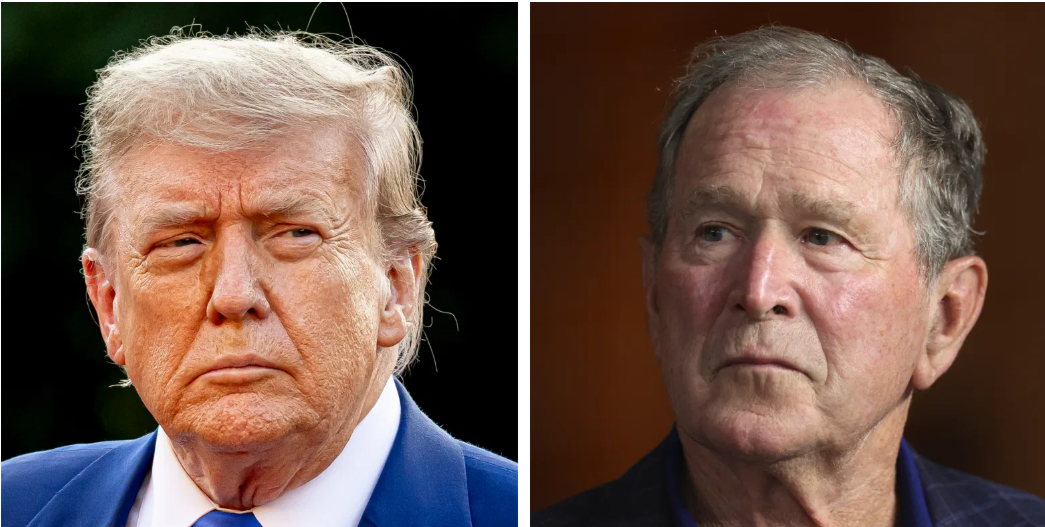
Former Presidents Bush and Obama, Along with Bono, Bid Emotional Farewell to USAID Staff as Agency Is Shuttered
On Monday, June 30, 2025, former Presidents George W. Bush and Barack Obama joined U2 frontman Bono in a private videoconference to console employees of the U.S. Agency for International Development (USAID) on what was effectively its last day as an independent agency.
Obama described the dismantling of USAID as “a travesty and a tragedy,” calling it “some of the most important work happening anywhere in the world.” He labeled the decision a “colossal mistake” and predicted that leaders from both parties would eventually recognize the agency’s value. Bush, who rarely criticizes his fellow Republican, focused on legacy, highlighting his signature PEPFAR (President’s Emergency Plan for AIDS Relief) initiative, which is credited with saving more than 25 million lives worldwide, primarily in sub-Saharan Africa. “You’ve shown the great strength of America through your work—and that is your good heart,” Bush told staff. “Is it in our national interests that 25 million people who would have died now live? I think it is, and so do you.”
Bono, visibly emotional, recited a poem he wrote for the occasion, defending the staff against accusations of wrongdoing. “They called you crooks. When you were the best of us,” he said, warning that the closure would lead to widespread suffering and potentially hundreds of thousands of additional deaths from disease and instability.
The event, closed to the media, occurred as USAID—founded in 1961 under President John F. Kennedy to deliver foreign economic and humanitarian aid—was officially absorbed into the State Department. Clips reviewed by the Associated Press showed Obama and Bono delivering tearful remarks, while Bush remained measured and focused on America’s compassionate legacy.
The shutdown stemmed from the Trump administration’s aggressive efficiency drive. Shortly after taking office in January 2025, President Trump and the Department of Government Efficiency (DOGE), initially led by Elon Musk, targeted USAID as a symbol of government waste. Musk publicly called the agency “a viper’s nest of radical-left Marxists who hate America” and a “criminal organization” that deserved to “die.” DOGE teams reviewed operations, leading to the cancellation of roughly 83% of programs and contracts—over 5,200 initiatives—after a six-week audit.
Secretary of State Marco Rubio, who served as acting USAID administrator in the agency’s final months, announced the changes. “Beyond creating a globe-spanning NGO industrial complex at taxpayer expense, USAID has little to show since the end of the Cold War,” Rubio stated. He cited failures to meet development goals, worsening instability in some regions, and growing anti-American sentiment despite billions spent. Starting July 1, 2025, remaining programs aligned with U.S. national interests would be managed directly by the State Department with greater accountability, strategy, and efficiency.
During a March 2025 address to Congress, Trump highlighted specific examples of what he called wasteful spending, including millions for DEI scholarships in Burma, LGBTQI+ promotion in Lesotho, indigenous empowerment projects, and roughly $8 million on NIH-funded studies involving hormone therapies in rodents—framed by critics as “making mice transgender.”
Supporters of USAID point to its humanitarian achievements, disaster relief, health programs, and soft power benefits. Critics argue that much of the post-Cold War spending strayed into ideological mission creep with limited strategic return for American taxpayers.
The rare bipartisan rebuke from Bush and Obama, paired with Bono’s advocacy, underscored deep divisions over the future of U.S. foreign assistance. While foreign aid represents less than 1% of the federal budget, the overhaul reflects a broader shift toward an “America First” approach that prioritizes clear national interests over expansive global development efforts. Outcomes—whether improved efficiency or increased global instability—will unfold in the years ahead.