Barron Trump: Raised in the Spotlight, Shielded by Silence
Born in Manhattan on March 20, 2006, Barron Trump entered the world with a last name that promised instant attention, endless assumptions, and relentless scrutiny. Few children are born into such a potent mix of wealth, power, and public fascination. Yet from his earliest days, his upbringing followed a different script—one shaped not by privilege or performance, but by deliberate restraint and quiet discipline.
The guiding force behind this approach has been his mother, Melania Trump. While his father, Donald Trump, commanded headlines, rallies, and television screens, Melania focused on the quieter, often invisible work of raising a son. She made an early and firm decision: Barron would not grow up as a spectacle. In a family known for volume, bravado, and larger-than-life personalities, she emphasized routine, manners, boundaries, and the power of silence. That silence, she believed, would serve as both protection and preparation.
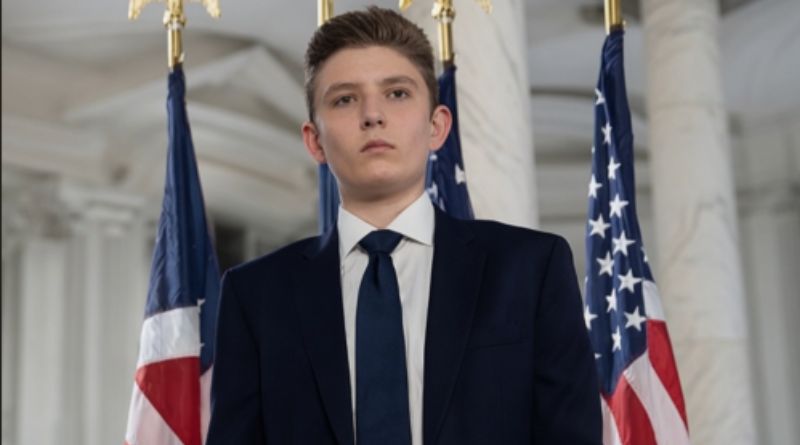
To outsiders, Barron often appeared reserved—standing a step behind at public events, hands folded, expression composed, rarely engaging with cameras or the swirling commentary around him. Some interpreted his quiet demeanor as aloofness. Others projected their own narratives onto him precisely because he refused to push back. In reality, the restraint was intentional. It was armor carefully forged by a mother who understood the risks of growing up famous.
Melania had witnessed how quickly public curiosity could turn cruel. She knew a child’s awkward moments could become viral fodder and that strangers felt entitled to comment on everything from a teenager’s height to his body language. Her response was protective: limit exposure, preserve normalcy where possible, and insist on privacy. Barron attended school with as much routine as Secret Service details and public life allowed. He was encouraged to excel in academics, master languages, and pursue personal interests rather than seek public validation. A consistent family rule, according to those close to them, was clear—Barron would not be used as a political prop. He would not be paraded, explained, or marketed for political gain.
This boundary became especially important during the intense years in the White House. As political divisions deepened, every member of the Trump family faced scrutiny, satire, and speculation. Barron, still a child, became the target of inappropriate jokes and online commentary. Melania stepped forward publicly more than once to draw a firm line: her son was off-limits. Whatever opinions people held about politics, attacking or mocking a minor crossed a line she would not tolerate.
As Barron grew, the contrast with the rest of the Trump brand only sharpened. While other family members engaged with media, social platforms, and public life, Barron remained largely silent. He did not speak at political conventions. He did not build an online persona. He appeared when family obligations required it and receded just as quietly afterward. The public felt they “knew” him through photographs and fleeting glimpses, yet they knew almost nothing substantive. That air of mystery invited speculation, but it also preserved something increasingly rare: personal choice.
Turning eighteen in March 2024 marked a symbolic threshold. Legally an adult, Barron gained the freedom to chart his own course. Yet those familiar with him describe no dramatic shift or public declaration. Instead, consistency prevailed. He has continued to carry himself as thoughtful, observant, and measured. He listens more than he speaks. Years spent in rooms filled with power—without being the center of it—taught him discernment. He learned to watch how people behave when they believe no one of consequence is paying attention.
This does not suggest a lack of confidence or ambition. Rather, his confidence does not seem to require an audience. In an era that rewards loudness, constant self-promotion, and personal branding, Barron stands out for what he chooses not to do. He does not chase relevance. He does not perform identity for likes or headlines. He operates outside the feedback loop that defines so many young people raised in the public eye.
This grounded approach is no accident. It stems from years of watching his family dominate news cycles while learning to remain steady amid chaos. Melania’s greatest gift to her son may not have been access to wealth or influence, but insulation—the space to develop away from constant judgment. She prioritized teaching him respect for others, control over his behavior, and the wisdom that not every thought or feeling needs to be shared publicly.
As Barron moves through his early twenties, assumptions about his future continue. Some expect him to pursue politics. Others speculate about business, technology, real estate, or a quieter path entirely. The truth appears simpler: he is likely to choose deliberately rather than reactively. His upbringing emphasized caution over impulse, substance over spectacle.
In a family defined by bold personalities and public drama, Barron Trump’s commitment to restraint may prove his most distinctive trait. The foundation built in those formative years—discipline, privacy, and inner steadiness—could ultimately prove more valuable than any inheritance or name recognition. Whatever direction he takes, it will reflect a young man shaped by extraordinary circumstances yet raised with deliberate, almost ordinary expectations of character and conduct.
That measured legacy, quietly cultivated away from the cameras, may be the most unexpected gift Melania Trump has given her son—and the one that could serve him best in the years ahead.