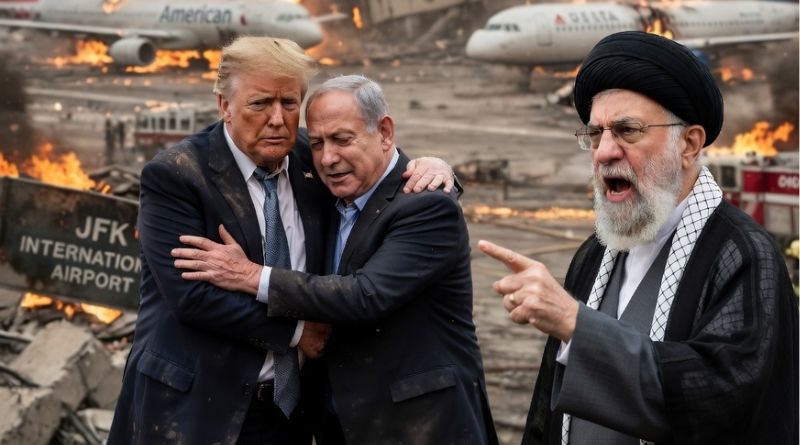
In a rapidly evolving and partially verified conflict, Iran has launched multiple waves of ballistic missile attacks, including strikes reported against Tel Aviv and other Israeli targets. According to Iranian statements, these operations—including the alleged use of cluster munitions—serve as retaliation for the killing of a senior security official and broader Israeli-U.S. military actions. Reports indicate damage to infrastructure in central Israel, with civilian casualties confirmed in several incidents near Tel Aviv, Haifa, and surrounding areas. Independent verification remains limited amid the fog of war, though footage and official Israeli accounts describe impacts from submunitions in populated zones.
The strikes have extended across the Gulf, with Iran targeting U.S. and allied military installations in Kuwait, Bahrain, the United Arab Emirates, Saudi Arabia, and Qatar. Explosions were reported at facilities including the U.S. Navy’s Fifth Fleet headquarters in Bahrain and various air bases hosting American assets. While some projectiles were intercepted, others caused damage to infrastructure, with limited casualties reported among U.S. and coalition personnel.
In response, Israel and the United States have conducted extensive counterstrikes on Iranian military sites, nuclear-related facilities (such as areas near Natanz, Isfahan, and Fordow), and energy infrastructure. Israeli defense systems, including Iron Dome and Arrow-3, have intercepted many incoming threats, but evolving Iranian tactics—such as cluster warheads that disperse submunitions mid-air—have strained these layered defenses, allowing some debris and impacts to reach ground targets.
The situation remains highly volatile. A fragile conditional ceasefire mediated earlier in April has faced repeated challenges, with sporadic exchanges continuing into May. Diplomatic efforts are stalled, as both sides signal readiness for further action. International observers warn of the risk of wider involvement, including proxies and additional regional actors.
Global consequences are already evident. Energy markets have experienced sharp volatility, with Brent crude prices surging amid fears of disruptions through the Strait of Hormuz and damage to production hubs. Supply concerns have driven prices significantly higher, affecting economies worldwide and prompting emergency monitoring by governments.
Analysts emphasize caution: while core elements of the escalation are corroborated, competing claims and misinformation can amplify tensions. As of mid-May 2026, calls for restraint and renewed diplomacy aim to prevent broader conflict and protect civilians in this dangerous turning point for regional security.