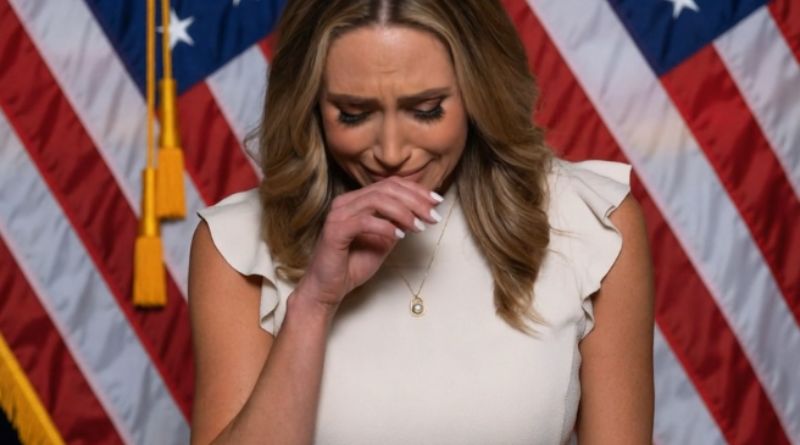
Lara Trump’s Dramatic Rise: The Republican Party’s Generational Power Shift
The announcement hit like a political earthquake. In just a few words, the future of the Republican Party shifted decisively. From North Carolina, Lara Trump was elevated from loyal surrogate to full-fledged power broker, named co-chair of the Republican National Committee alongside Chairman Michael Whatley. Her mandate extended far beyond traditional fundraising or logistics—it represented a fundamental realignment at the top of the GOP.
In a sterile meeting room in North Carolina, a generational power shift was quietly sealed. To supporters, this move was long overdue. After years of internal friction, the party was finally bending to its most dominant figure, Donald Trump, and his trusted inner circle. Installing Lara Trump as RNC co-chair wasn’t merely a promotion; it marked the formal merging of official party machinery with one family’s political destiny. Her elevation cemented Donald Trump’s direct influence over the committee’s purse strings, messaging strategy, and ground game as the nation headed into one of the most brutal election cycles in modern history.
Lara Trump, a former television producer and Donald Trump’s daughter-in-law, brought energy, media savvy, and unwavering loyalty to the role. She focused heavily on grassroots mobilization, election integrity efforts, and courting low-propensity voters—areas many believed had been neglected by previous leadership. Under her watch, the RNC shattered fundraising records while sharpening its operational edge.
To critics inside the GOP, however, the appointment felt like the last guardrail snapping. Traditional institutionalists watched with unease as the Republican National Committee transformed, in their view, into the Trump National Committee. The era of quiet resistance within the party appeared over, replaced by open alignment with Trumpism.
Either way, Lara Trump’s new role sent an unmistakable signal: the Republican Party was no longer operating as a loose coalition of interests, but as a more unified, personality-driven force. The move reflected the post-2020 reality that Trump’s brand had become the gravitational center of the modern GOP. Supporters hailed it as necessary evolution. Detractors warned of dynastic risks. Yet few could deny its impact on the party’s direction heading into 2024 and beyond.