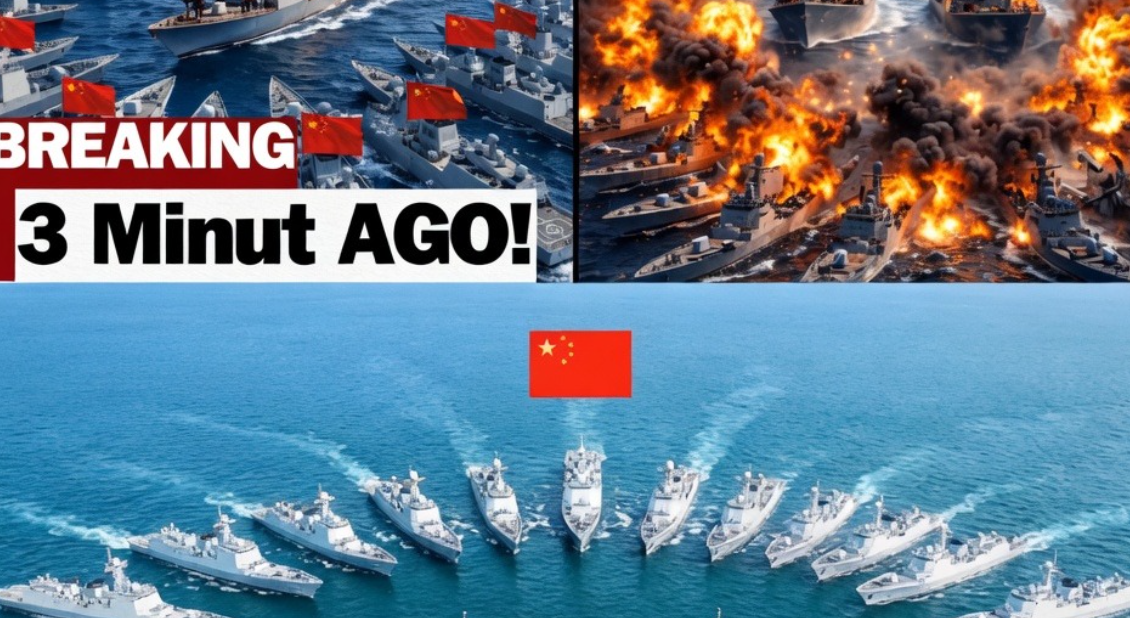
On February 3, 2026, tensions in the South China Sea reportedly intensified during a naval encounter involving U.S. and Chinese forces, drawing renewed attention to one of the world’s most contested maritime regions. According to reports, the USS Chafee and USS Gridley were escorting Philippine supply vessels during a routine mission intended to demonstrate continued American support for the Philippines amid ongoing territorial disputes with China.
The mission was described as part of broader efforts to reinforce alliance commitments and maintain freedom of navigation in disputed waters. However, the operation quickly became tense when multiple Chinese naval and coast guard vessels moved into the area. Military observers said a large Chinese formation, including destroyers, frigates, corvettes, and coast guard cutters, positioned itself around the American ships in what analysts described as one of the most assertive maritime maneuvers seen recently in the region. The deployment signaled a direct challenge to U.S. naval presence in waters claimed by Beijing. Reports indicated that a warning was transmitted from the Chinese side, demanding the U.S. vessels leave the area within 30 minutes. The message underscored the growing strain between the two powers, as both sides remained on alert.
The commanding officers aboard the U.S. destroyers maintained course, signaling that the mission would continue despite pressure from surrounding forces. Defense analysts noted that any withdrawal under such circumstances could have been interpreted as a strategic concession, particularly in an area where competing claims remain unresolved. As the standoff continued, both sides reportedly carried out tactical maneuvers while avoiding direct escalation. Although dramatic claims circulated online suggesting a major naval battle had occurred, no verified evidence supported reports that Chinese ships were destroyed. No official statements from either government confirmed combat engagement. The incident nevertheless highlighted how quickly encounters in the South China Sea can become dangerous. With overlapping territorial claims, frequent military patrols, and rising geopolitical rivalry, even routine missions now carry significant diplomatic risk. Analysts say the confrontation reflects the fragile balance of power in the region, where military signaling increasingly shapes strategic calculations while diplomacy remains essential to preventing wider conflict ⚖️🚢🌐