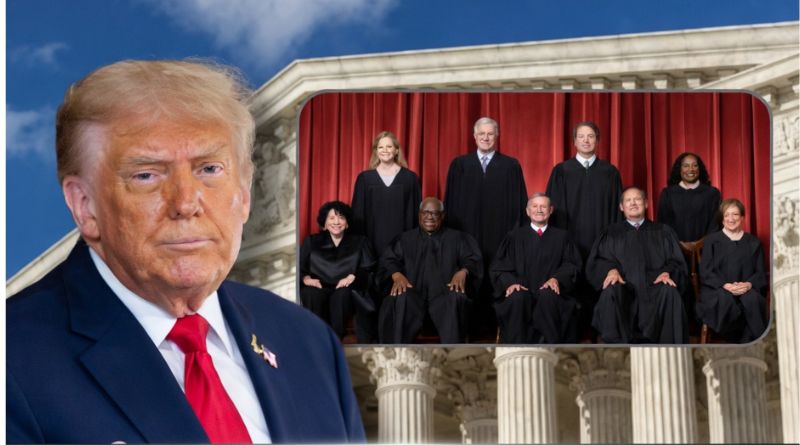
In a significant legal victory for the Trump administration, the Supreme Court has cleared the way for the deportation of eight immigrants currently detained at a U.S. military base in Djibouti. The ruling allows the federal government to move forward with sending these individuals to South Sudan, a country currently flagged by the State Department for extreme risks including armed conflict, kidnapping, and crime. This decision effectively vacates restrictions previously imposed by U.S. District Judge Brian Murphy of Massachusetts, who had sought to block removals to “third countries”—nations not originally named in the immigrants’ removal orders—without strict anti-torture safeguards. The legal battle intensified when Judge Murphy ruled that the government had defied his earlier injunction by attempting to transport individuals from Cuba, Vietnam, and Laos to South Sudan. While the U.S. Solicitor General, D. John Sauer, argued that Murphy’s rulings were “wreaking havoc” on national security and disrupting sensitive foreign policy efforts, lawyers for the immigrants maintained that the administration was simply being asked to follow existing laws regarding human rights. Despite these concerns, the high court’s conservative majority clarified that their previous stay on Murphy’s injunction applied in full, rendering the lower court’s attempts at enforcement moot.
The court’s decision featured a notable split within its liberal wing. Justice Elena Kagan joined the conservative majority, explaining that while she had originally disagreed with the decision to allow such removals, a district court cannot legally force compliance with an order that the Supreme Court has already stayed. In contrast, Justice Sonia Sotomayor and Justice Ketanji Brown Jackson issued a sharp dissent. Sotomayor lambasted the majority for what she termed an “indefensible” refusal to justify its extraordinary decisions, expressing grave concern that the noncitizens would face the likelihood of torture or death once handed over to authorities in South Sudan.
Ultimately, the ruling underscores the high court’s willingness to grant the executive branch broad authority over the third-country removal process. By prioritizing diplomatic interests and the finality of its own stays over lower court injunctions, the Supreme Court has set a major precedent for how deportation procedures are handled when involving transit points like Djibouti and volatile destinations like South Sudan.