Scientists Linked to Secret Space Research Face Wave of Deaths and Disappearances, Prompting Congressional Investigation
House Oversight Committee Chairman Rep. James Comer (R-KY) has elevated concerns about a troubling pattern involving at least eleven U.S. scientists and researchers connected to highly classified space, aerospace, and advanced propulsion programs. In recent years, these experts have either died under suspicious circumstances or gone missing, raising alarms at the highest levels of government.
“It’s very unlikely that this is a coincidence,” Comer told Fox News. “Congress is very concerned about this. Our committee is making this one of our priorities now because we view this as a national security threat.” He added that there is “a high possibility that something sinister is taking place here.”
The issue gained renewed national attention after the February 27 disappearance of retired Air Force Maj. Gen. William Neil McCasland. The former commander of Wright-Patterson Air Force Base, a site long associated with classified aerospace programs and unidentified anomalous phenomena (UAP) research, vanished from Albuquerque, New Mexico. McCasland reportedly left without his phone or glasses, and despite extensive searches, no trace of him has been found.
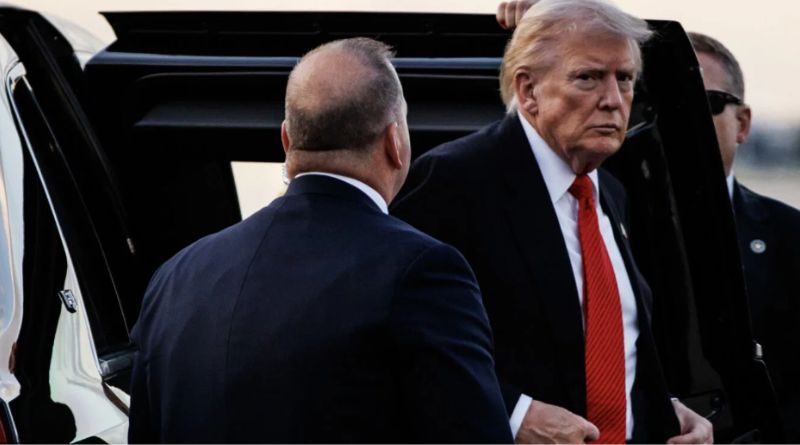
President Donald Trump addressed the growing concerns directly on Thursday, confirming he had attended a briefing on the cases. “Some of them were very important people, and we are going to look at it over the next short period,” Trump said. “I hope it’s random, but we’re going to know in the next week and a half.”
White House Press Secretary Karoline Leavitt stated that the administration is coordinating with the FBI and relevant agencies for a comprehensive review. “The White House is actively working with all relevant agencies and the FBI to holistically review all of the cases together and identify any potential commonalities that may exist. No stone will be unturned in this effort,” she said.
One case that has drawn particular online scrutiny is the 2022 death of Amy Eskridge, a 34-year-old Huntsville, Alabama researcher. Eskridge co-founded the Institute for Exotic Science and focused on experimental propulsion technologies, including what she described as “antigravity” research. She died on June 11, 2022, from a self-inflicted gunshot wound, according to official records.
In a 2020 interview with YouTuber Jeremy Rys, Eskridge spoke openly about intense pressure and harassment tied to her work. “We discovered antigravity, and our lives went to [expletive], and people started sabotaging us,” she said. “It’s harassment, threats. It’s awful.” She warned that researchers in unconventional fields often face escalating aggression and described patterns where scientists who made breakthroughs would suddenly disappear from public view or stop publishing.
Other names now linked in public discussion include NASA scientist Monica Jacinto Reza, contractor Steven Garcia, astrophysicist Carl Grillmair, MIT physicist Nuno Loureiro, NASA engineer Frank Maiwald, Los Alamos-associated employees Melissa Casias and Anthony Chavez, NASA researcher Michael David Hicks, and pharmaceutical scientist Jason Thomas. These individuals were all involved in sensitive military, nuclear, aerospace, or advanced technology research.
While officials have not confirmed any direct connections between the cases, the concentration of incidents among personnel working on cutting-edge, often classified projects has fueled widespread speculation. Theories range from foreign adversary targeting—particularly by nations like China or Russia seeking technological advantages—to possible internal suppression of breakthrough discoveries in areas such as exotic propulsion and UAP-related science.
Lawmakers emphasize that the clustering of these events among cleared experts working on national security priorities warrants serious scrutiny, regardless of the ultimate findings. Mental health challenges, workplace stress, and personal issues remain possible explanations in some cases, but the pattern has prompted a formal congressional push for answers.
As the Oversight Committee and federal agencies continue their reviews, the public awaits clarity on whether these tragedies represent coincidence, individual circumstances, or something more coordinated and threatening to U.S. technological edge. Updates are expected in the coming weeks as investigators examine potential common threads across the cases.