THE GREAT SQUEEZE: Inside the Unprecedented Institutional Siege of the Trump Presidency
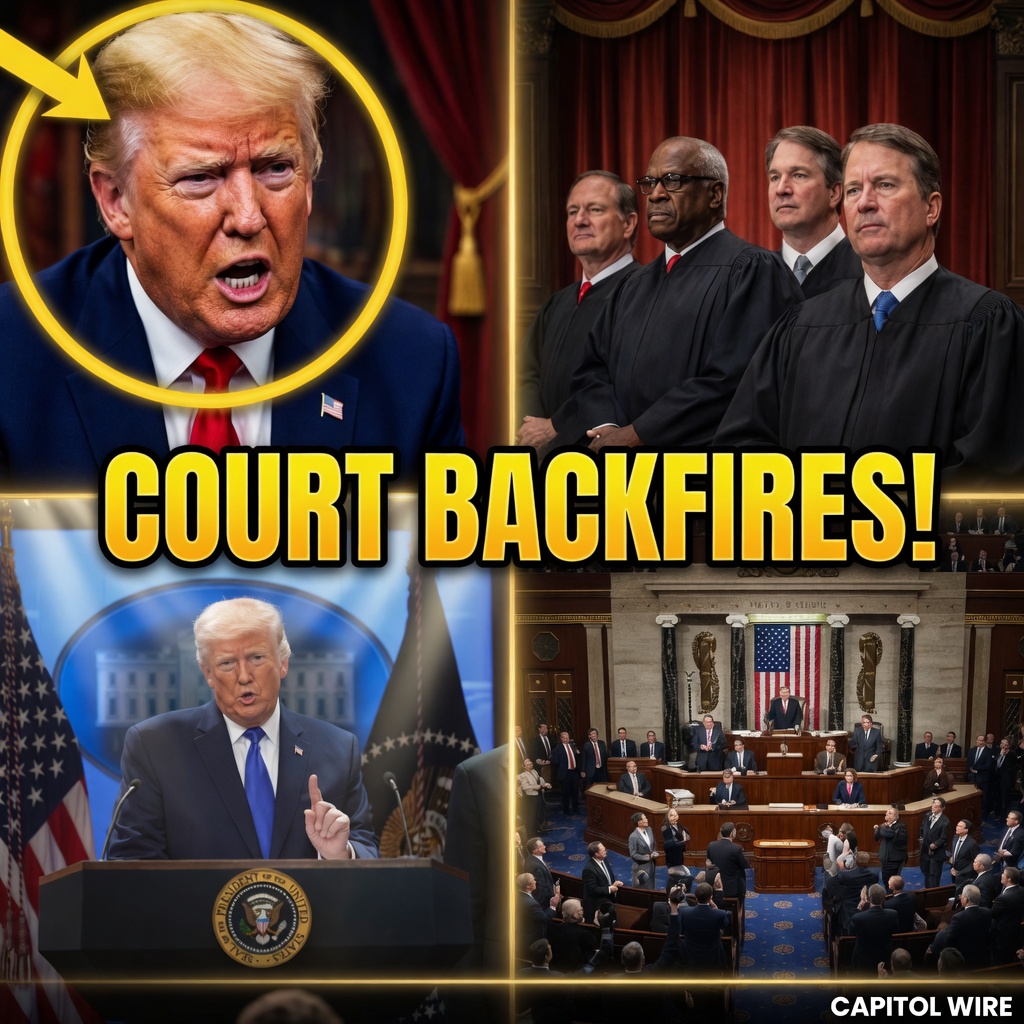
WASHINGTON D.C. — In the turbulent heart of American power, two crushing forces are converging on President Donald Trump simultaneously, tightening their grip in ways most Americans have yet to fully grasp. As of late April 2026, the presidency is being compressed from both ends of Pennsylvania Avenue in a historic “pincer move” that threatens to leave the executive branch in its weakest position in over a century.
On one flank, the U.S. House of Representatives is advancing with renewed intensity, debating formal articles of impeachment for an unprecedented third time. On the other, the Supreme Court is issuing a series of precise 6-3 decisions that are dismantling key pillars of the President’s economic and executive agenda. The result is not a sudden collapse but a methodical, piece-by-piece erosion of presidential authority. Ruling by ruling and vote by vote, the practical space for Donald Trump to govern is narrowing—even as he continues to project unshakable confidence to his supporters.
I. The Legislative Front: The Third Impeachment Abyss
No president in U.S. history has faced three impeachment trials. Yet House Resolution 537, filed by Representative John Larson (D-CT), now rests on the House clerk’s desk. The resolution employs stark language, accusing the administration of “serial usurpation,” “war crimes,” and “piracy.” The immediate trigger is the ongoing conflict with Iran. President Trump authorized massive military strikes without explicit congressional approval, reigniting the long-standing constitutional debate over war powers.
The erosion of support within Trump’s own party may prove more damaging than the articles themselves. After the President’s social media post warning that “a whole civilization will die tonight” if Iran missed a deadline, Republican solidarity fractured. In a striking reversal, Representative Marjorie Taylor Greene—once among his fiercest defenders—denounced the rhetoric as “evil and madness” and joined calls to invoke the 25th Amendment.
While the Senate’s 67-vote threshold for removal remains a high bar, the psychological impact is significant. Republican senators in competitive states are weighing their political survival amid rising gas prices and double-digit polling swings for the MAGA brand in key districts such as Tarrant County, Texas.
II. The Judicial Front: The Supreme Court’s Surgical Strikes
While Congress generates headlines, the Supreme Court is quietly reshaping the boundaries of executive power. In February 2026, the Court delivered what many view as the most severe setback of the second term: a 6-3 ruling invalidating the President’s entire global tariff program. Chief Justice John Roberts, joined by Trump appointees Neil Gorsuch and Amy Coney Barrett, ruled that emergency powers could not be used to impose sweeping taxes on foreign imports.
The Narrowing Zone of Executive Power (2025-2026)
- Global Tariff Program: Unconstitutional (6-3) — Eliminated 145% tariffs on China and a 10% global baseline.
- Illinois National Guard: Application Denied — Blocked federalization of the Guard against the governor’s wishes.
- Immigration Judges: Bid Rejected — Prevented efforts to restrict judges’ public speech.
- Major Questions Doctrine: Invoked — Demanded explicit congressional approval for broad policy changes.
The Court is not seeking to remove the President but to enforce constitutional limits. By striking down the “America First” trade strategy, it has made clear that declarations of national emergency do not grant unlimited authority to rewrite federal law.
III. The 14th Amendment Shadow
Overhanging both tracks is the unresolved shadow of the 14th Amendment. Although the Supreme Court previously barred states from unilaterally disqualifying federal candidates, questions about disqualification for insurrection remain potent. Any detailed findings from the current impeachment process could create a lasting factual record usable in future litigation, even after a Senate acquittal, potentially weakening claims of presidential immunity.
IV. The Institutional Winners
In this contest, the ultimate beneficiary may be the constitutional system itself. For years, the “Trump Superpower” relied on near-total Republican loyalty enforced through fear. That dynamic is fading. Senators like John Cornyn and Susan Collins have resisted demands to eliminate the filibuster, recognizing that a simple-majority precedent would empower future Democratic administrations.
Conclusion: The Squeeze Continues
Donald Trump occupies the presidency on paper, but his effective authority is being steadily compressed by rulings, votes, and shifting political realities. The office won in 2024 is not the one being exercised in 2026. As midterms approach, three fronts will prove decisive: the House war-powers vote and its razor-thin margins; whether Gorsuch and Barrett continue prioritizing legal text over appointing president; and whether the economic fallout from the Iran conflict severs the President from his base.
This is no theatrical downfall but a profound test of American guardrails. The squeeze is underway and will persist until executive limits are firmly reestablished.