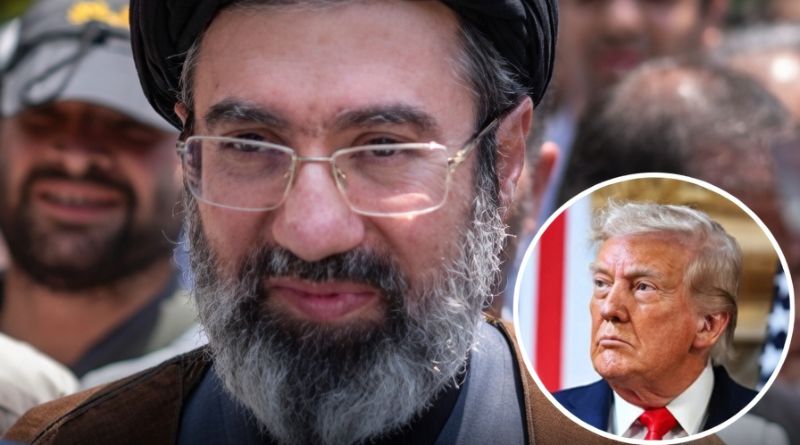
In an era defined by unprecedented regional volatility, the Islamic Republic of Iran has entered a transformative and uncertain chapter following the first public address by its newly appointed Supreme Leader, Mojtaba Khamenei. This broadcast, which aired on state television on Thursday, March 12, serves as a pivotal moment in the aftermath of the high-stakes military operation that claimed the life of his father, Ayatollah Ali Khamenei, in late February 2026. The transition of power occurs against a backdrop of active warfare involving U.S.-Israeli forces, marking a historical junction for a nation that has only seen three such leaders since the 1979 Islamic Revolution. The statement, read by an anchor rather than delivered in person, has ignited a firestorm of international debate regarding the stability of the new regime and the physical health of its leader. The circumstances surrounding the delivery of the message were as notable as the content itself. Instead of a live or recorded video appearance, the broadcast featured only a still image of Mojtaba Khamenei while a news presenter read the scripted text. This lack of visual or auditory presence has fueled global speculation that the new leader may be suffering from injuries sustained during the joint Israeli-U.S. airstrike on his father’s residence in Tehran. While an unnamed Iranian official cited by Reuters maintains that Khamenei was only “lightly injured” and remains active in his duties, high-ranking officials in the United States, including the U.S. Defense Secretary, have suggested a more dire condition, with some reports even claiming he may be incapacitated, disfigured, or in a coma.
Substantively, the statement was characterized by a tone of unwavering militancy and a commitment to vengeance. Mojtaba Khamenei framed the ongoing conflict not merely as a defense of territory, but as a sacred obligation to avenge the “blood of the martyrs.” He explicitly stated that retaliation would not be confined to those responsible for the death of the former Supreme Leader, but would extend to all Iranian citizens killed in the conflict. By invoking the image of his father’s body—described as a “mountain of steadfastness” with a “clenched hand”—the new leader sought to symbolize the regime’s continued resolve and refusal to capitulate under external pressure. This rhetoric is clearly intended to bolster domestic morale and signal to Israel and the United States that Tehran will not deviate from its hard-line strategic objectives. A critical component of the address focused on the strategic use of economic and maritime leverage. Khamenei reinforced Iran’s intention to utilize the Strait of Hormuz as a primary bargaining tool in the wartime theater. As a vital artery for global energy shipments, the potential total closure of the strait has already caused a surge in international oil prices and forced global powers to tap into strategic reserves. Khamenei’s threat to seize or destroy assets if financial restitution is not provided for war damages highlights a strategy of maximum economic pressure. This aggressive stance is further compounded by the mention of opening “new fronts” in regions where the “enemy” is vulnerable, suggesting a potential expansion of the conflict beyond its current borders into uncharted territorial domains.
Despite the belligerent tone of the Supreme Leader, the Iranian government appears to be engaging in a complex multi-layered diplomatic strategy. While Khamenei delivers messages of total resistance, other entities, such as the Iranian Ambassador to the United Nations, have attempted to mitigate international alarm by stating that Tehran has no desire to completely disrupt global energy security. This divergence suggests a tactical “good cop, bad cop” approach, wherein the Supreme Leader maintains internal ideological purity and military deterrence, while diplomats attempt to prevent total economic isolation and further escalation that could lead to regime collapse. This internal tension is a hallmark of the Islamic Revolutionary Guard Corps (IRGC) influence, which holds deep ties to the new leader. Ultimately, the elevation of Mojtaba Khamenei by the Assembly of Experts—conducted with wartime urgency on March 8—signifies a consolidation of power during a period of existential threat. The move to bypass long-standing constitutional deliberations in favor of a rapid succession demonstrates the IRGC’s desire for continuity and stability. However, the mystery surrounding the leader’s physical state remains a significant variable. Whether Khamenei will eventually emerge as a visible commander or remain a shadowy figurehead will likely dictate the next phase of the Middle East conflict. For now, the global community remains on edge, as the rhetoric of retaliation from Tehran suggests that the path toward de-escalation remains obscured by a commitment to prolonged and multifaceted confrontation.