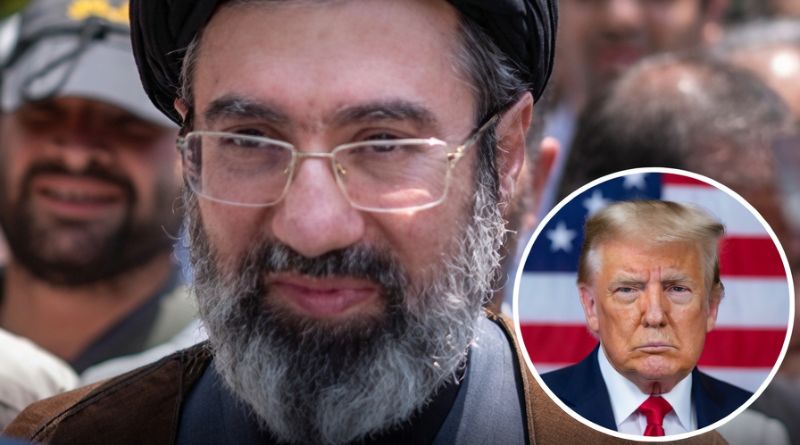
Mojtaba Khamenei, the newly appointed Supreme Leader of Iran, has broken his silence following the dramatic escalation of regional hostilities. His first official statement was broadcast on Iranian state television on March 12, 2026, marking a pivotal moment in the country’s history. This appearance—or lack thereof—came just days after he was elected by the Assembly of Experts to succeed his father, Ayatollah Ali Khamenei, who perished in a targeted U.S.-Israeli airstrike in late February. The transition occurs at a time when Tehran is fully embroiled in a conflict that has devastated the regional landscape and challenged the internal stability of the Islamic Republic. The nature of the broadcast itself has become a subject of intense international scrutiny. Rather than a live televised address or a video recording, the message was read aloud by a news anchor while a static image of the new leader remained on screen. This departure from traditional leader addresses has sparked widespread speculation regarding Mojtaba Khamenei’s health and whereabouts. Reports from various intelligence agencies and news outlets like Reuters offer conflicting narratives; some suggest he suffered light injuries during the strike on his father’s residence, while officials from the United States have speculated that he may be severely disfigured or even incapacitated. Despite these rumors, the official state narrative presents a leader who is active and firmly in control.
In his written address, Khamenei adopted a fiercely defiant stance, promising swift and severe retaliation for the deaths of his father and other Iranian “martyrs.” He emphasized that Iran’s quest for vengeance would not be limited to the high-ranking leadership but would encompass every citizen lost to “unjust attacks” by U.S.-Israeli forces. By framing the conflict as a defense of the nation’s honor and blood, Mojtaba Khamenei is clearly attempting to consolidate his base and rally the Iranian public around a message of national resilience. His description of his father’s body as a “mountain of steadfastness” serves to further the cult of martyrdom that underpins the regime’s ideological framework. Strategic and economic threats were also central to the leader’s message. Khamenei underscored Iran’s intent to use the Strait of Hormuz as a geopolitical “lever.” By threatening to maintain the closure or disruption of this vital maritime route, Tehran is signaling its willingness to use global energy security as a bargaining chip. The leader even suggested that if financial restitution for damages was not provided by his enemies, Iran would feel justified in seizing or destroying assets as it sees fit. This hardline economic policy has already contributed to a volatile global market, with oil prices reaching unprecedented highs and forcing global powers into emergency economic measures. The elevation of Mojtaba Khamenei represents a significant shift in Iranian power dynamics. A mid-level cleric with deep and influential ties to the Islamic Revolutionary Guard Corps (IRGC), his selection by the Assembly of Experts was reportedly unanimous and swift. The urgency of the wartime context allowed for a rapid succession that bypassed many of the usual constitutional deliberations. His close relationship with the IRGC suggests that the military’s influence over Iran’s foreign and domestic policy will only increase during his tenure. This alignment is likely to result in a more aggressive military posture, as hinted by his mentions of opening new “fronts” in unconventional theaters of war.
While the rhetoric from the Supreme Leader’s office remains uncompromising, there appear to be subtle efforts within the Iranian diplomatic corps to manage the fallout. The Iranian ambassador to the United Nations recently clarified that the state does not intend a total, permanent closure of the Strait of Hormuz, reflecting a complex dual-track strategy. Tehran appears to be balancing “maximum pressure” tactics intended to deter further attacks with a pragmatic need to maintain some level of economic continuity. However, with Mojtaba Khamenei at the helm, the prevailing tone remains one of resistance and refusal to bow to external demands or military pressure. Ultimately, the international community remains on edge as it watches the first steps of this new leadership. The humanitarian cost of the war is already staggering, with thousands dead and millions displaced throughout the Middle East. Whether Mojtaba Khamenei can maintain internal order while prosecuting a high-stakes war remains to be seen. His first message has set a clear tone of defiance, retaliation, and strategic leverage. As the world watches for any sign of his physical presence, the shadow cast by his first official statement suggests that Iran is prepared for a long and arduous confrontation with its adversaries, with no immediate end to the regional crisis in sight.