THE GULF EXPLOSION: Naval Clash, Information War, and Diplomatic Deadlock
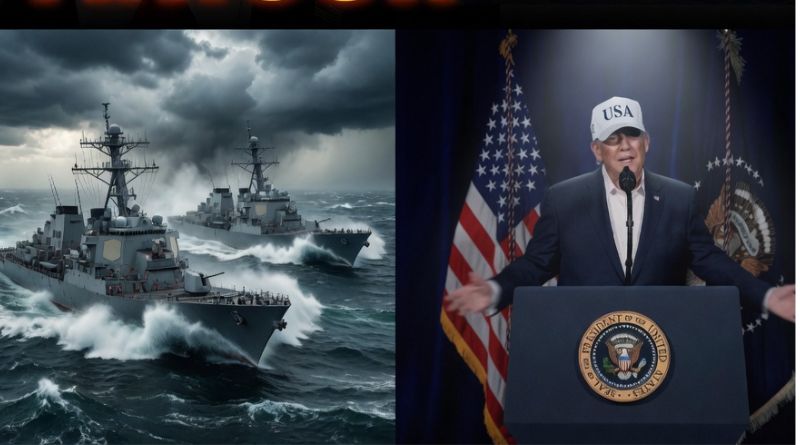
GULF OF OMAN — On April 19, 2026, at 2:47 PM local time, the USS Spruance, a U.S. guided-missile destroyer, fired its 5-inch Mark 45 naval gun into the engine room of the MV Touska, an Iranian-flagged cargo vessel. U.S. Central Command released footage of the operation, showing repeated warnings before the precise strikes that disabled the ship’s propulsion. U.S. Marines subsequently boarded and seized the vessel.
The incident, which occurred in the northern Arabian Sea as the Touska attempted to reach Bandar Abbas, has rapidly escalated tensions. Oil prices surged past $100 per barrel amid fears of broader disruption. Tehran condemned the action as “piracy” and an attack by “American terrorist forces,” vowing massive retaliation. Washington justified it as enforcement of a naval blockade against a sanctions-listed vessel accused of illegal activity.
The Interception and Immediate Fallout
According to President Trump’s Truth Social posts and CENTCOM statements, the Touska ignored hours of warnings. The crew was ordered to evacuate the engine room before the Spruance fired, stopping the ship without reported casualties. Iran described the event as a violation of a recent ceasefire and responded with claims of drone swarms targeting U.S. warships. This marks one of the most direct U.S.-Iran naval confrontations in decades.
Iran’s Information Warfare Campaign
Beyond the military exchange, Iran has waged an aggressive information campaign. Official embassy accounts posted viral memes mocking President Trump, including an “Einstein” edit with the caption “Block plus block equals unblock, find the mistakes,” and a Lego animation depicting him as a small figure in the Strait of Hormuz. Another series, “The Files,” hinted at compromising material on U.S. dealings in the region. Analysts see this as a dual-track strategy: undermining U.S. credibility globally while preparing kinetic responses.
High-Risk Targets and Economic Threats
Iran has explicitly warned it will abandon previous restraints if U.S. strikes continue. Four critical targets have been highlighted:
- Strait of Bab el-Mandeb: Could shut down Suez Canal traffic.
- Saudi Aramco facilities: Potentially removing 5% of global oil supply quickly.
- Yanbu Terminal: Saudi Arabia’s key Red Sea export route.
- Fujairah (UAE): Major bunkering and export hub.
Energy experts warn that coordinated strikes could push oil toward $200 per barrel, doubling gasoline prices for many consumers and triggering a global economic shock.
White House Challenges
Inside the administration, military leaders have reportedly presented stark options: a risky full-scale operation to seize key Iranian-controlled islands or pursuing negotiations that may require concessions. Sources describe internal frustration and a lack of unified strategy. President Trump’s approval rating has fallen to around 37% in recent polls, with sharp criticism of his Iran policy.
Efforts to restart talks in Islamabad face steep hurdles. Iran demands a ceasefire in Lebanon, release of frozen assets, U.S. recognition of its role in the Strait of Hormuz, and long-term security guarantees. Without these, Tehran says it will skip the summit.
A Region on Edge
The clash has shattered a fragile ceasefire, compounding conflicts involving Israel in Gaza and Lebanon. As markets swing and diplomats maneuver, the world watches whether this confrontation leads to wider war or forces a difficult de-escalation. Trust between Washington and Tehran appears at a breaking point, with economic fallout already rippling worldwide.