Some headlines arrive with such force that they seem to declare themselves true before anyone has time to question them. They do not invite scrutiny—they explode into public view, wrapped in urgency, certainty, and fear.
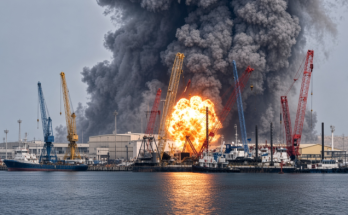
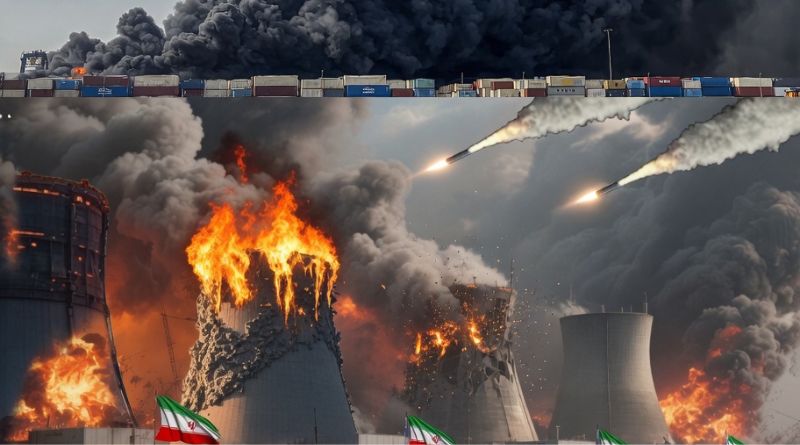
That is exactly what happened with the latest viral claim: that the United States launched an intercontinental missile that destroyed an Iranian nuclear facility in Tehran.
It is a dramatic image—one strike, one target, one defining moment—but available verified reporting does not support that exact version of events.
There is currently no confirmed public evidence from major reliable outlets that the United States fired an intercontinental ballistic missile at a nuclear site in Tehran in the way the headline suggests. What is confirmed, however, is serious enough to unsettle governments, energy markets, and millions watching the region move closer to prolonged conflict.
According to Reuters, the current war began on February 28 with coordinated U.S. and Israeli attacks on Iran and has since expanded into a broader confrontation involving missile strikes, infrastructure damage, threats to energy routes, and mounting economic pressure. The conflict has already crossed several boundaries once considered too dangerous to touch.
That reality helps explain why dramatic misinformation spreads so quickly. Viral myths thrive when real conditions are unstable—and few regions are more unstable right now than the Middle East.
Reuters also reported that Donald Trump said on April 1 that the United States could leave Iran quickly but return for additional strikes if necessary, while suggesting Iran’s leadership had already been heavily disrupted by the war. Those remarks alone show how far the confrontation has escalated.
The appeal of the viral headline is obvious. It offers one unforgettable image: a single devastating blow. But wars rarely unfold in one clear cinematic moment. They emerge in layers—first the strike, then confusion, then competing claims, and finally the slower work of verification.
That slower process matters now more than ever.
Major outlets confirm that Tehran has come under increased pressure as attacks intensified. Reports indicate Israel has launched repeated strikes affecting several Iranian areas, while Tehran remains central both strategically and symbolically. As Iran’s capital, any threat involving Tehran immediately carries enormous political and psychological weight.
There is also genuine concern surrounding Iran’s nuclear infrastructure. Satellite imagery previously showed signs of damage near the Natanz nuclear facility, but international monitors emphasized that early claims required careful verification. Iran’s nuclear system is not concentrated in one simple location—it is dispersed, fortified, and designed to withstand attack.
That is why the viral wording becomes misleading. Intercontinental ballistic missiles are not standard tools for conventional publicly acknowledged strikes of this type. They belong to a strategic category associated mainly with nuclear deterrence and extreme escalation.
Ironically, the real conflict is already alarming without exaggeration.
Reuters has reported that only part of Iran’s missile arsenal can be confirmed destroyed, while significant underground capabilities may still remain active. That means Iran retains military capacity, and the war is far from resolved.
At the same time, diplomatic efforts are accelerating. Pakistan, Turkey, and Egypt have all been linked to mediation attempts as officials seek ways to prevent wider regional escalation.
The economic signals are equally telling. Oil prices have risen sharply amid fears over the Strait of Hormuz and concerns that military escalation could disrupt global supply routes. Markets react not to rumors, but to perceived risk.
For civilians in Tehran, the distinction between fact and exaggeration may offer little comfort. The fear is already real. Every warning, every strike, every new statement adds to a growing atmosphere of uncertainty.
And that may be the most important truth: the war has become intense enough that people instantly believe even the most extreme claims.
Reliable reporting confirms expanding military pressure, continued scrutiny of nuclear-related facilities, diplomatic urgency, and public threats of harsher action.
What it does not confirm is the exact viral claim of an intercontinental missile destroying a nuclear facility in Tehran.
That difference matters.