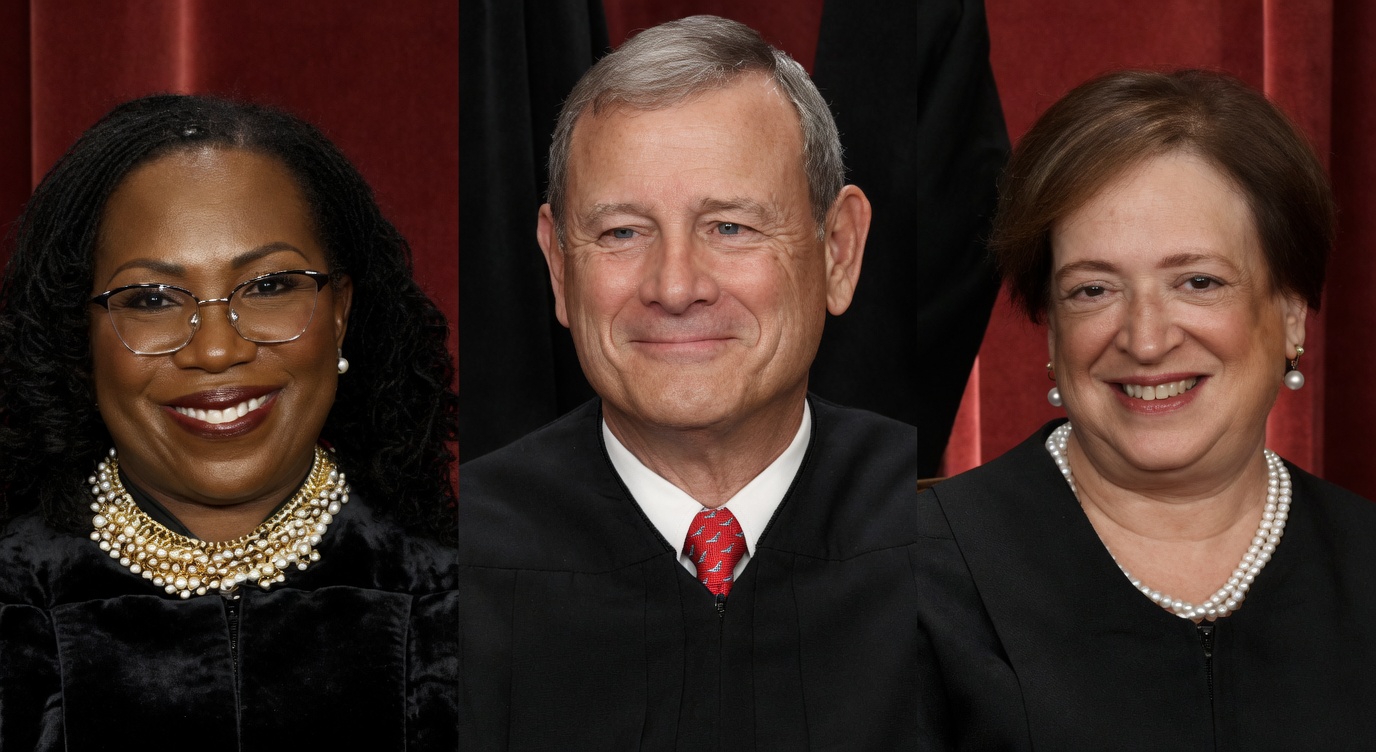
U.S. Supreme Court Justice Ketanji Brown Jackson drew widespread criticism for what many viewed as a confusing hypothetical during oral arguments over President Donald Trump’s executive order limiting birthright citizenship.
The Day One order aims to end automatic U.S. citizenship for children born to illegal immigrants or those on temporary visas without legal permanent residency. It interprets the Fourteenth Amendment’s Citizenship Clause—”All persons born or naturalized in the United States, and subject to the jurisdiction thereof”—as requiring full allegiance to the United States, not merely physical presence.
During the April 1, 2026, arguments, Jackson used a personal example involving travel to Japan to explore the concept of “allegiance.” She stated: “I was thinking, I, a U.S. citizen am visiting Japan. And what it means is that if I steal someone’s wallet in Japan, the Japanese authorities can arrest me and prosecute me. It’s allegiance meaning can they control you as a matter of law.” She added that even as a temporary visitor, one owes a form of local allegiance, allowing reliance on Japanese law for protection or prosecution.
Jackson then asked whether this logic would extend “allegiance” to temporary residents and undocumented individuals simply by being in the United States, potentially supporting broader birthright citizenship.
The case, involving challenges from the ACLU and others, featured Solicitor General D. John Sauer defending the administration. Several justices, including Neil Gorsuch, questioned aspects of restricting citizenship. Chief Justice John Roberts pressed on claims of exploitation by wealthy foreigners engaging in birth tourism, while Justice Amy Coney Barrett inquired about historical applications, such as to formerly enslaved people.
President Trump made history by becoming the first sitting president to attend Supreme Court oral arguments in person, observing quietly from the front row before departing partway through.
The administration argues the Fourteenth Amendment, ratified after the Civil War, was intended to grant citizenship to newly freed slaves—not to children of those who entered illegally or owed primary allegiance elsewhere. Legal analyst Gregg Jarrett noted that Sauer emphasized the framers’ intent behind “subject to the jurisdiction thereof,” citing 1866 debates. Sponsors like Lyman Trumbull explained it required “full and complete allegiance to the U.S. and not owing allegiance to any foreign power.” Sauer contended that illegal presence does not automatically create such jurisdiction.
The United States remains one of roughly 30 countries offering nearly unrestricted birthright citizenship. Critics highlight its scale: the Center for Immigration Studies estimates 225,000 to 250,000 births to illegal immigrant parents in 2023, plus about 70,000 to temporary visitors—roughly 7-9% of total U.S. births.
On Truth Social and in statements, Trump argued that foreign countries sometimes “sell citizenships” for profit and that the amendment was never meant for descendants of illegal immigrants. Fox News host Sean Hannity echoed these concerns, citing the figures as evidence of exploitation.
The arguments underscored deep divisions over whether temporary or unlawful presence satisfies the constitutional threshold for automatic citizenship. While some justices appeared skeptical of the executive order’s scope, the case tests the limits of presidential authority to reinterpret a foundational amendment through enforcement policy. The Court’s eventual ruling could reshape immigration law and the meaning of American citizenship for generations.