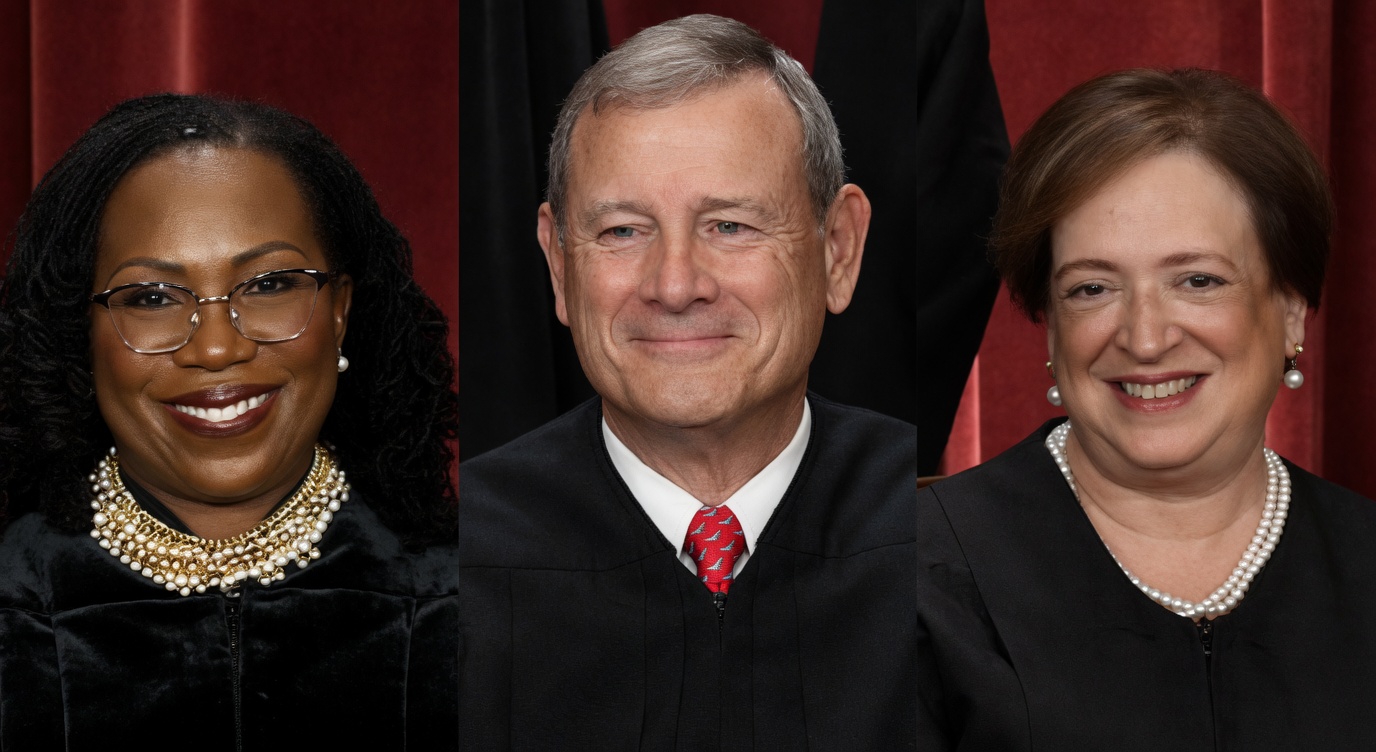
U.S. Supreme Court Justice Ketanji Brown Jackson drew puzzled reactions during oral arguments over President Donald Trump’s executive order aimed at ending automatic birthright citizenship for children born in the United States to illegal immigrants or temporary visitors without legal permanent residency.
The order, signed on Trump’s first day of his second term, seeks to reinterpret the Fourteenth Amendment’s Citizenship Clause, which states that all persons “born or naturalized in the United States, and subject to the jurisdiction thereof,” are citizens. The administration argues this clause was intended primarily to grant citizenship to formerly enslaved people after the Civil War and does not extend to those whose parents owe no full allegiance to the U.S.
During the proceedings, Jackson used a hypothetical scenario involving allegiance while questioning ACLU attorney Cecilia Wang. She described a U.S. citizen visiting Japan who steals a wallet: Japanese authorities could arrest and prosecute the visitor under their laws. “It’s allegiance meaning can they control you as a matter of law,” Jackson explained. She added that the traveler could also rely on Japanese authorities to prosecute someone who stole their own wallet, creating a mutual legal relationship even for a temporary visitor on vacation.
Jackson then asked whether this logic meant that temporary residents and undocumented individuals in the U.S. similarly owe a form of “allegiance” simply by being physically present, subjecting them to American legal authority and potentially qualifying their children for citizenship.
The arguments featured Solicitor General D. John Sauer defending the administration, while several justices—including Chief Justice John Roberts, Justice Neil Gorsuch, and Justice Amy Coney Barrett—pressed for clarifications. Roberts questioned claims of exploitation by wealthy foreigners, and Barrett explored historical applications, such as to formerly enslaved individuals. Trump made history by becoming the first sitting president to attend Supreme Court oral arguments in person, observing quietly from the front row.
Critics of broad birthright citizenship note that the U.S. is among only about 30 countries offering it with few restrictions. Legal analyst Gregg Jarrett highlighted the key phrase “subject to the jurisdiction thereof,” arguing that the amendment’s framers in 1866 intended it to require full allegiance to the United States, “not owing allegiance to any foreign power.” Sauer emphasized this historical context during arguments.
According to preliminary 2023 estimates from the Center for Immigration Studies, roughly 225,000 to 250,000 children were born to illegal immigrant parents that year—about 7 percent of U.S. births—plus tens of thousands more to temporary visitors. Fox News host Sean Hannity cited similar figures, underscoring the scale of the issue.
Trump has argued that birthright citizenship was meant for the children of freed slaves, not descendants of illegal immigrants, and has criticized foreign countries for effectively “selling” citizenship benefits. The case continues to fuel debate over the original meaning of the Fourteenth Amendment and the limits of executive authority in immigration policy.