Mexico’s Sharp Rebuke: Sheinbaum Condemns U.S. Operation in Venezuela as Violation of International Law
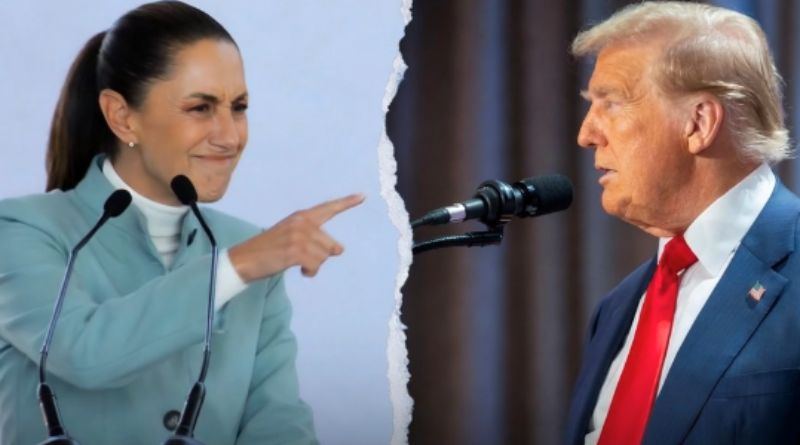
In the days following the stunning U.S. military operation in Venezuela on January 3, 2026, and the dramatic capture of President Nicolás Maduro and his wife Cilia Flores, Mexican President Claudia Sheinbaum delivered one of the most pointed critiques of U.S. foreign policy from a Latin American leader in recent decades.
Sheinbaum’s response went beyond rhetoric. Rooted firmly in international law, Mexico’s traditional diplomatic doctrine of non-intervention, and the country’s constitutional principles, it quickly influenced the regional diplomatic conversation. Her government released a forceful official communiqué that labeled the U.S. action—codenamed Operation Absolute Resolve—a unilateral breach of the United Nations Charter.
The statement specifically invoked Article 2(4) of the UN Charter, which declares: “All Members shall refrain in their international relations from the threat or use of force against the territorial integrity or political independence of any state, or in any other manner inconsistent with the Purposes of the United Nations.” Mexico argued that the surprise strikes on Venezuelan targets and the extraction of Maduro violated this core prohibition, setting a dangerous precedent for the hemisphere.
Sheinbaum reinforced the position in public remarks and on social media. “We categorically reject intervention in the internal affairs of other countries,” she stated. “The history of Latin America is clear and compelling: intervention has never brought democracy, never generated well-being, nor lasting stability.” She emphasized that Mexico’s stance aligns with its constitution and long-held Doctrina Estrada principles, which prioritize sovereignty and peaceful resolution of disputes.
The condemnation highlighted broader tensions. While the U.S. justified the raid on grounds of law enforcement—citing Maduro’s U.S. indictments for narco-terrorism and drug trafficking—along with national security concerns over migration and regional stability, critics viewed it as an act of aggression without UN Security Council approval or clear self-defense justification. Mexico’s statement warned that such military actions risk destabilizing the Americas and could embolden further interventions.
Sheinbaum’s position also carried implicit domestic and bilateral weight. With ongoing U.S. pressure on Mexico regarding drug cartels, her firm language served as a reminder that Mexico would not tolerate similar operations on its soil. At the same time, she acknowledged generally positive U.S.-Mexico relations while insisting on respect for sovereignty.
Regionally, Mexico’s stance aligned with several leftist governments but underscored divisions across Latin America. The communiqué amplified calls for multilateralism and prompted discussions at the United Nations, where concerns about precedent and international norms echoed Mexico’s concerns.
As Venezuela navigates an uncertain transition under acting leadership, Sheinbaum’s response underscores a principled stand: in an era of great-power assertiveness, smaller and mid-sized nations continue to champion the rules-based order—even when it puts them at odds with their powerful neighbor. Whether this critique will meaningfully constrain future actions remains to be seen, but it has firmly reshaped the immediate diplomatic narrative in the Americas.