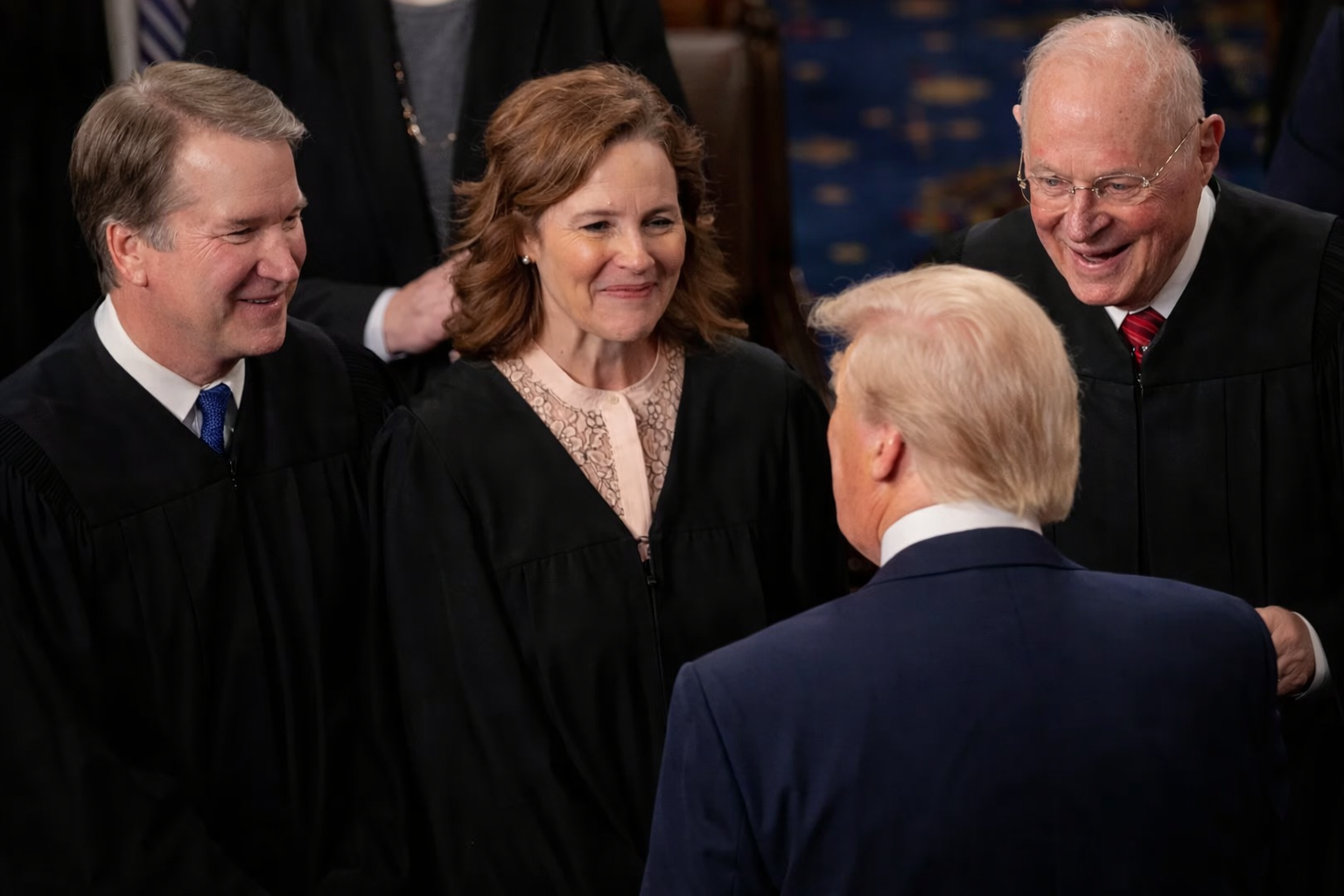
In a significant week for federal jurisprudence, the U.S. Supreme Court issued two major rulings impacting federal procedural rules and the limits of executive power. In the case of Coney Island Auto Parts Unlimited Inc. v. Burton, the court ruled unanimously that challenges to federal judgments—even those claimed to be “void”—must be filed within a “reasonable time” under Federal Rule of Civil Procedure 60(c)(1). This decision resolves a long-standing circuit split, aligning the court with the Sixth Circuit and overturning the majority view that void judgments could be challenged at any point in time. Writing for the court, Justice Samuel Alito emphasized that the plain text of the procedural rules does not provide an exemption for void judgments regarding timing. The case began when Coney Island Auto Parts, a Brooklyn-based firm, sought to overturn a 2015 default judgment, claiming improper service. The court’s ruling prioritizes legal finality, with Justice Ketanji Brown Jackson noting during arguments that while the complexity of void judgments is real, procedural mechanisms must balance fairness with the need for definitive closures in litigation.
Separately, in a 6-3 decision, the Supreme Court struck down broad tariffs implemented by the Trump administration, ruling that the International Emergency Economic Powers Act (IEEPA) does not grant the president unilateral authority to impose trade penalties without explicit Congressional authorization. This ruling serves as a major judicial check on the administration’s trade policy, which had utilized tariffs as a central tool to address trade imbalances and support American industries. The majority opinion reaffirmed that the constitutional authority to regulate commerce and set tariffs remains primarily with the legislative branch.
The administration’s reaction was swift, with Vice President JD Vance denouncing the ruling as “lawlessness” on social media. Vance argued that the court’s interpretation ignored the intent of Congress and would ultimately harm supply chain resiliency. However, Donald Trump signaled that the administration would pursue alternative legal avenues, a strategy supported by legal scholars like Jonathan Turley of George Washington University Law School. Turley suggested that the administration still possesses a “toolbox” of other statutes to implement its economic agenda, ensuring that the battle over trade authority is far from over.