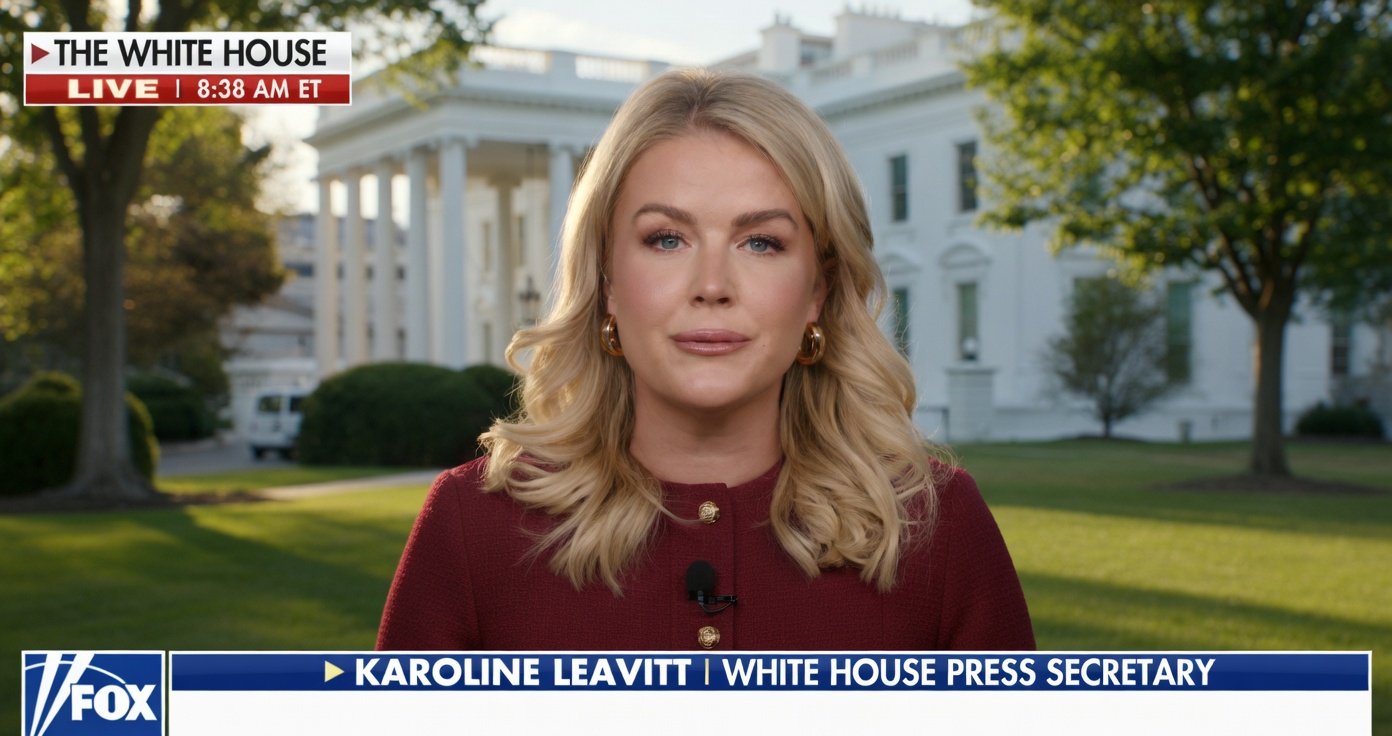
The White House and high-ranking officials within President Donald Trump’s administration have moved swiftly to refute reports suggesting that Iran might be preparing drone attacks against California. This denial comes in response to an ABC News report claiming the FBI warned state police about unidentified vessels off the coast potentially launching unmanned aerial vehicles (UAVs). Press Secretary Karoline Leavitt took to X to demand a retraction, arguing that the reporting was based on a single, “unverified” tip that the news organization deliberately misrepresented to cause public alarm. Leavitt emphasized that no credible threat from Iran to the U.S. homeland exists, marking a sharp divide between official intelligence assessments and media narratives. The original ABC report suggested that as of early February 2026, the Iranian regime allegedly aspired to conduct surprise attacks if the United States launched strikes against their territory. However, the Trump administration pointed out that the news outlet omitted the crucial qualifier—that the information was “unverified”—which was explicitly stated in the internal FBI communications. Even California’s Democratic Governor, Gavin Newsom, stepped in to alleviate public concern, stating that while the state remains vigilant and dedicated intelligence teams are active, there is no confirmed evidence to support the claims of an imminent drone strike targeting the Golden State. This domestic communication battle coincides with the escalation of Operation Epic Fury, a major military offensive aimed at dismantling the Iranian regime’s capabilities. Karoline Leavitt issued a comprehensive defense of the operation, responding to criticisms from conservative commentators that the administration’s messaging has been contradictory. She outlined several non-negotiable objectives: the total destruction of Iran’s missile industry, the annihilation of the Iranian Navy, and the neutralization of terrorist proxies used to attack U.S. forces. Leavitt noted that the opening strikes of the operation have already been devastatingly effective, reporting the deaths of 49 senior regime leaders, most notably Supreme Leader Ayatollah Ali Khamenei.
Despite these declarations, the administration faces significant pushback from analysts like Matt Walsh, who have highlighted what they perceive as a lack of clarity regarding the ultimate goal of the conflict—specifically whether the goal is regime change or simply the degradation of military assets. Walsh further questioned the administration’s logic regarding Iran’s nuclear capabilities. While the White House now lists the dismantlement of the nuclear program as a primary objective of Operation Epic Fury, officials had previously claimed that Operation Midnight Hammer had already “obliterated” those sites last year. This discrepancy has fueled a debate over the transparency and consistency of the administration’s military updates. In her closing arguments, Leavitt framed the current conflict as a historical necessity, asserting that President Donald Trump is addressing a threat that previous leaders were “too weak” to handle. She characterized the Iranian regime as a persistent enemy of Western Civilization that has spent 47 years facilitating the killing of Americans while chanting “death to America.” By pursuing a path of total military victory, the administration aims to ensure that Iran can never obtain a nuclear weapon or continue to fund global instability. As Operation Epic Fury continues, the administration maintains a clear stance: the United States will win, and the era of Iranian-backed terrorism will be brought to a definitive end.